

The Wrong Ruler (Part 2)

Laura knew before anyone told her. That was the thing she would say afterwards, when there was an afterwards to speak of.
She had known in the way mothers sometimes know. Not dramatically, not with any single moment she could point to, but as a slow accumulation of small things that didn't quite add up. The way Daniel came home from school and put his bag down, today was with a particular heaviness. The way he never talked about reading. The way he would retell entire episodes of programmes he'd watched with a fluency and detail that took her breath away, and then sit over a reading book at bedtime like a child approaching something faintly dangerous.
He was bright. She knew he was bright. Not in the way all mothers think their children are bright — she had interrogated that thought carefully, turned it over, looked for the wishful thinking in it. But it wasn't wishful thinking. Daniel could hold a conversation that stopped adults mid-sentence. He remembered everything he had ever been told about animals, about space, about how engines worked. He asked questions that she sometimes didn't know how to answer, and received her attempts at explanation with a patience and seriousness that made him seem, occasionally, older than seven.
And yet.
His reading book had not moved in three weeks. The same level, the same careful halting crossing of the same ice. His teacher had said he was making progress. His teacher had said he was well supported. His teacher had said, most recently, that his scores were where they needed to be for this point in the year.
His scores were where they needed to be.
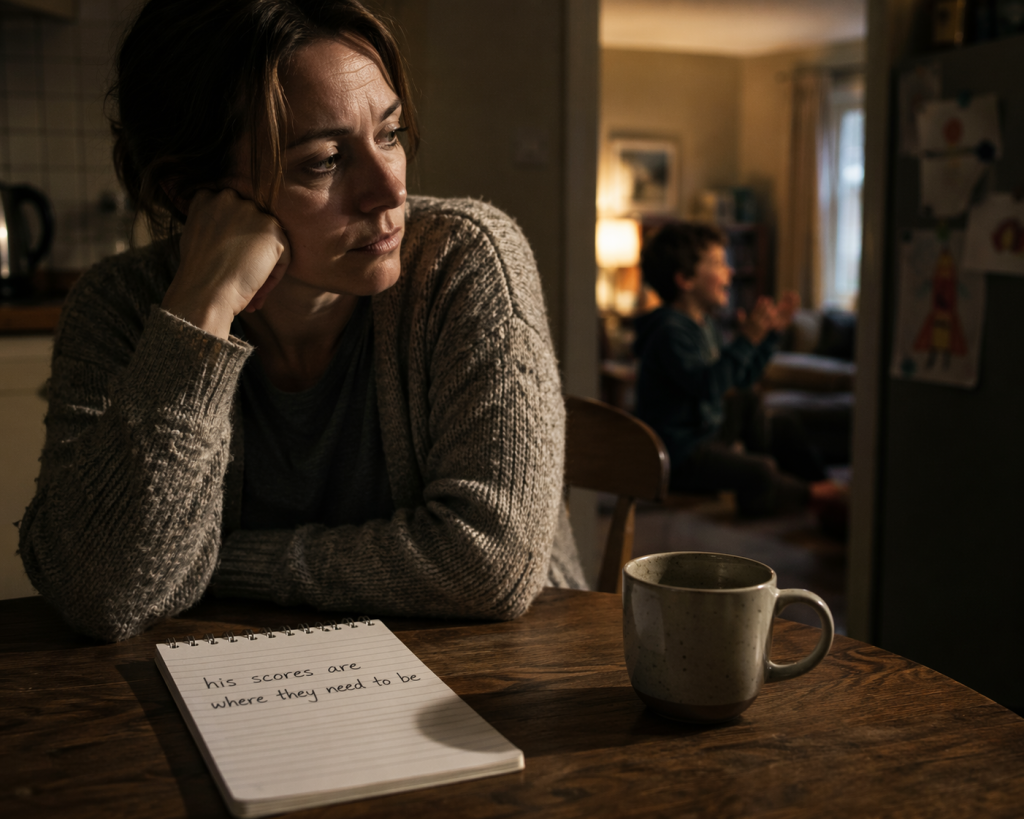
Laura had written it down when she got home, because it had sounded important and she hadn't wanted to mishear it. She looked at it on the notepad on the kitchen counter for several days afterwards. It sat there with the quiet authority of a fact, and she didn't know how to argue with a fact.
But she also knew her son.
It had started, if she was honest, long before October.
It had started with a bedtime story when Daniel was four — the way he could recite entire books from memory but held the page at an angle that suggested the words themselves meant little to him. It had started with the nursery key worker who had mentioned, gently and then not mentioned again, that Daniel seemed to find letters tricky. It had started with the small, persistent feeling she had learned to push down because he was young, and boys developed later, and he would catch up, and she didn't want to be that parent.
She had caught it and released it many times over three years. Each time it surfaced she had found a reasonable explanation and submerged it again. She had become, without quite meaning to, very good at reassuring herself.
But it had never fully gone. And by the time Daniel appeared at the top of the stairs on that Monday morning in October, it had been living in her chest for longer than she could precisely say.
It had started, if she was honest, on a Monday morning in October.
Except that it hadn't. Not really.
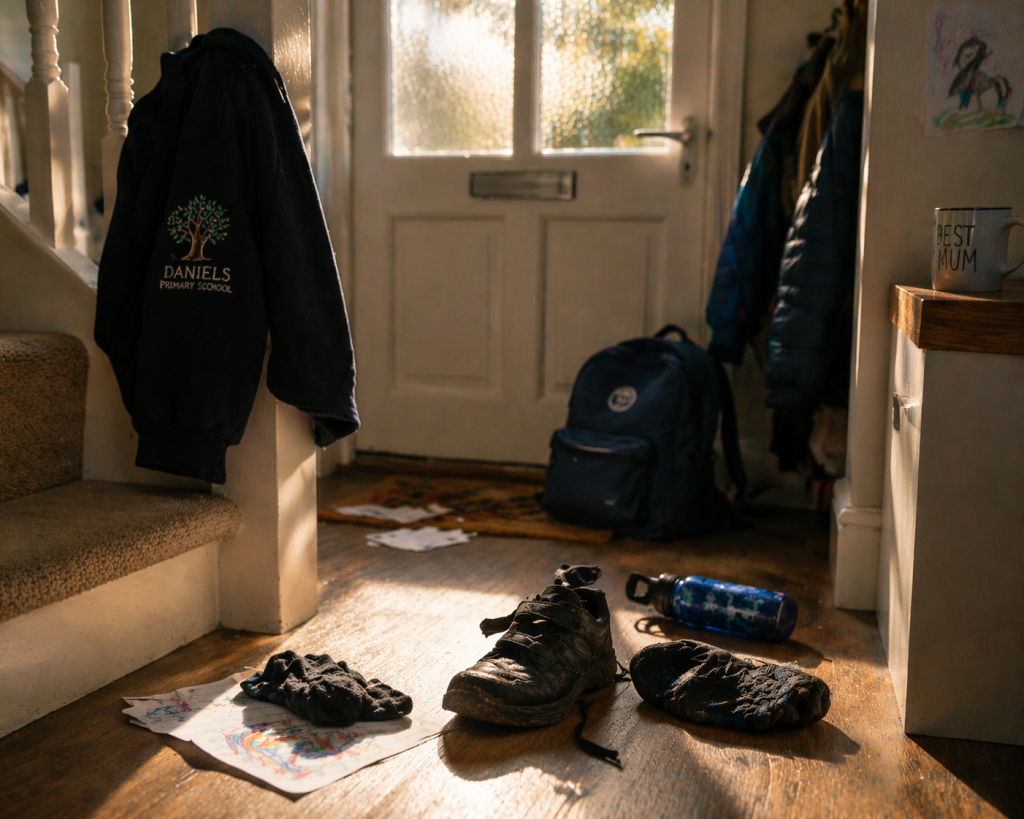
Daniel had appeared at the top of the stairs in his uniform with his shoes on the wrong feet and an expression she hadn't seen before. Not upset, exactly. Not unwell. Something quieter and more considered than either of those things.
"I don't want to go," he said.
Laura had heard this before from other children, in other morning rushes, and knew the shape of it — the theatrical reluctance, the testing of boundaries, the negotiation. This wasn't that. Daniel wasn't performing. He was simply telling her something.
"Why not, love?"
He thought about it for a moment, in the way he thought about most things.
"I have to sit next to Jacob now," he said. "Jacob's clever."
She had waited for more. More didn't come.
She had done what she always did — found his shoes, corrected their feet, handed him his bag, and walked him to the gate with her hand in his. He had gone in without a fuss, because Daniel was not a child who made fusses. But at the gate he had paused and looked back at her with an expression she carried with her for the rest of the day and couldn't quite put down.
It happened again on Wednesday. And the following Monday. And the Monday after that.
Each time she asked gently and each time he gave her some small version of the same answer. Jacob finished his work. Jacob's writing was neat. Jacob knew all the words on the sheet. Daniel relayed these facts without apparent resentment, which somehow made it worse. He wasn't jealous of Jacob. He was simply, quietly, aware of a distance between them that he couldn't account for and neither could she.
She kept sending him in. She wasn't sure what else to do.
She mentioned it briefly at the school gate to another parent, who said boys were often slower to settle, and that seemed to close the conversation. She mentioned it to her own mother, who said Daniel was fine, he was wonderful, he just needed time. She mentioned it to nobody else because she didn't want to be the mother who made a fuss, and also because she didn't yet have the right words for what she was actually worried about.
She just knew that something wasn't sitting right. And the knowing of it had taken up a quiet residence in her chest that she couldn't evict.
She looked at the notepad on the kitchen counter.
His scores are where they need to be.
She read it again. Then she put the kettle on and told herself that probably meant everything was fine.
November arrived and Daniel's reluctance settled into something more like resignation, which Laura found harder to watch than the reluctance had been.
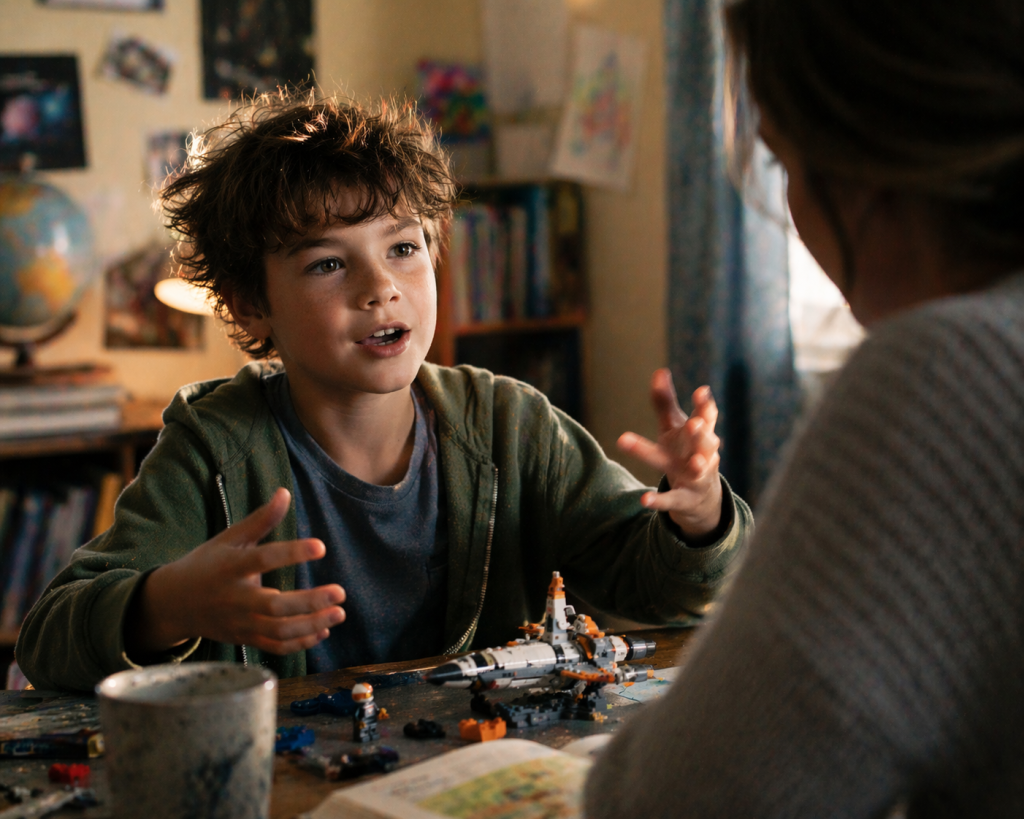
He still went in. He still came home. He still sat at the kitchen table in the evenings and told her things — about a documentary he'd watched at school, about something a dinner lady had said that had made him think, about a question he'd had during assembly that he hadn't known who to ask. He was still entirely, completely himself in those moments, and she held onto them.
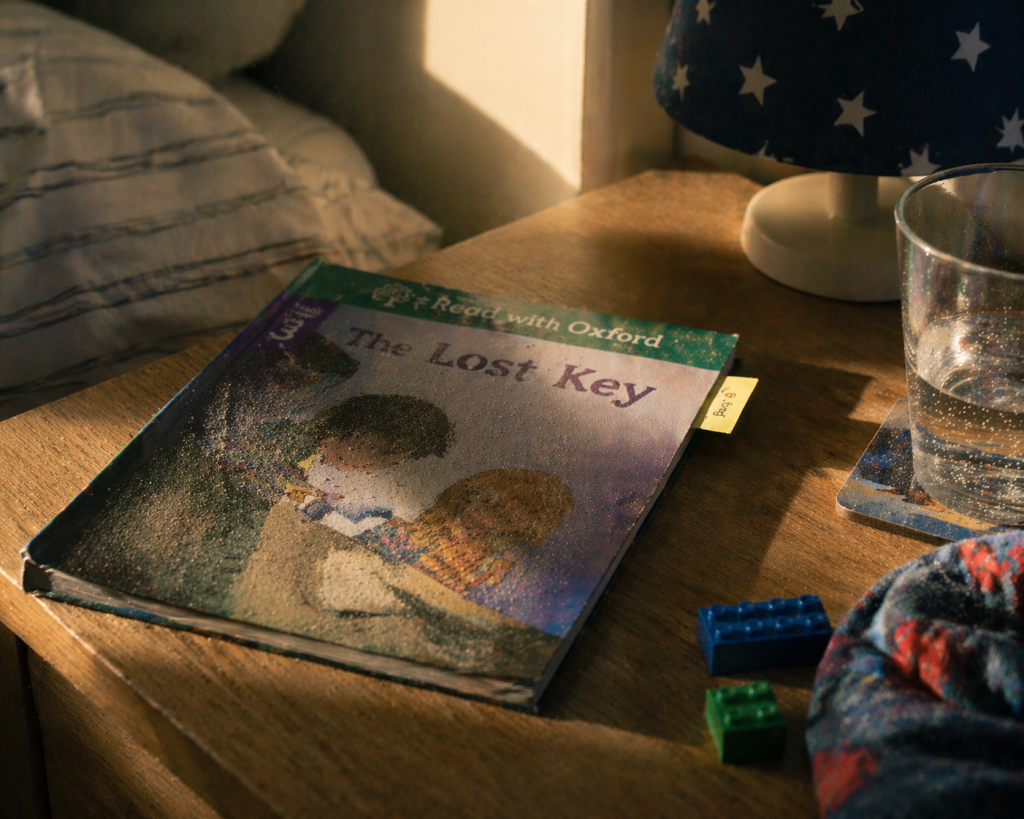
But the reading book hadn't moved. And when she sat with him at bedtime, his body did something she had started to notice and couldn't un-notice — a faint bracing, barely perceptible, as he opened the cover. As though he was preparing for something.
She had emailed the teacher in the third week of October. A careful email, she thought — friendly, not demanding, framed as a question rather than a concern. She had rewritten it four times before sending it and read it back twice more afterwards to check it didn't sound difficult.
The reply had been warm and prompt. Daniel was doing well. He was a pleasure to have in class. He was engaged and thoughtful in discussions. His scores were broadly in line with expectations and he was receiving support. There was nothing to worry about.
Laura had read it at the kitchen counter and felt, briefly, foolish.
She had replied to say thank you and that she was glad, and then she had stood very still for a moment before picking up her bag and going to work.
The feeling of foolishness faded after a day or two. But the other feeling — the one that had taken up residence in her chest — did not. It was still there, unchanged, unimpressed by the email and its reassurances. It didn't speak in facts or scores. It just sat there, patient and certain, the way Daniel himself was patient and certain, and waited.
She had started writing things down by then. Small things, in the notepad that had migrated from the kitchen counter to her bedside table. The reading level that hadn't changed. The mornings at the gate. What he'd said about Jacob. The way he talked about space and animals and engines and never, not once, talked about school as somewhere his mind went to stretch itself.
She didn't know what she was building towards. She just felt that if something was wrong, she wanted to have paid attention.
It was a Tuesday evening in late November when her phone rang.
She was washing up. Daniel was in the living room, narrating an elaborate game to himself in a voice she could hear through the wall — detailed, structured, alive with invention. She had been listening to it with one part of her mind and thinking about the notepad with another.
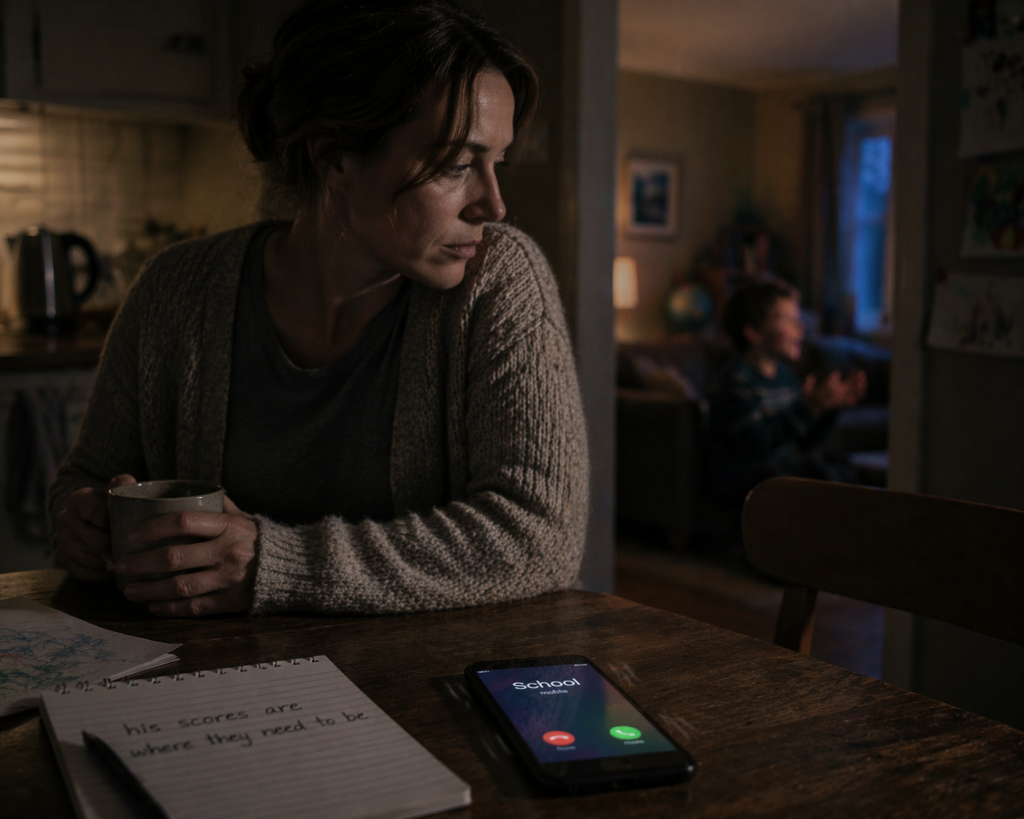
She picked up the phone and looked at the screen.
Daniel's school.
Her stomach dropped in the way it always dropped when school rang. The immediate and involuntary assumption that something was wrong, that he was hurt, that she had missed something or forgotten something or that the other shoe had finally, audibly, fallen. She answered.
"Mrs Marsh? It's Miss Calloway. I hope I'm not calling at a bad time. I wanted to talk to you about Daniel — there's something I'd very much like to share with you."
Laura turned off the tap.
In the living room, Daniel's game continued, uninterrupted. His voice moved through the story he was building — confident, unhurried, completely unaware that two people who had both been quietly paying attention had just, for the first time, found each other.
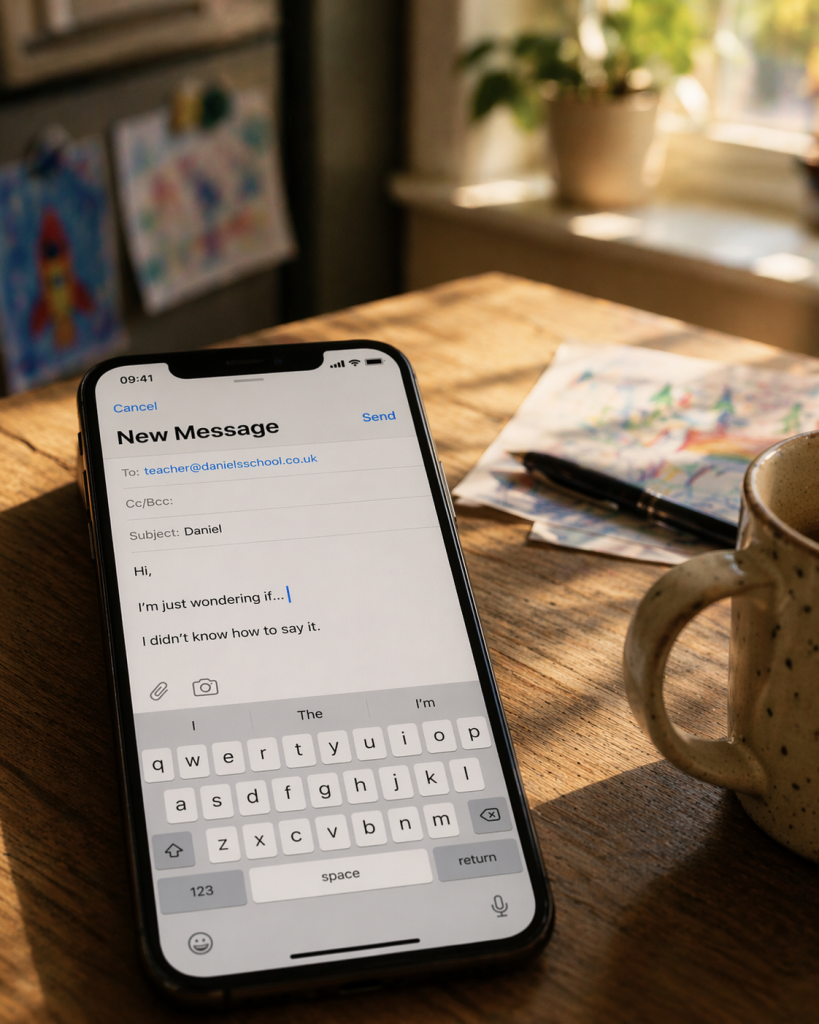
Laura sat down at the kitchen table without quite deciding to.
"Is everything alright?" she said, because that was always the first question.
"Yes — nothing to worry about, I promise." Miss Calloway's voice was warm but also careful, in the way voices are careful when someone is choosing their words. "I wanted to call because something happened in class last week that I haven't been able to stop thinking about. And I realised I should probably talk to you about it."
Laura said nothing. She was listening in the particular way she had learned to listen when something mattered.
"We did a writing task," Miss Calloway said. "A story prompt — just a picture, a forest path, something in the trees. And Daniel — he couldn't get much down on paper, which I know is something we've talked about before." A brief pause. "But one of the other children asked him what was in the trees, and he just — he told this story. Out loud. And it was extraordinary."
Laura closed her eyes for a moment.
"He does that at home," she said quietly.
"I thought he might." Another pause, longer this time. "Mrs Marsh, I've been looking back at my notes on Daniel. And I've been thinking about the gap between what his scores say and what I actually see when he's — when he's being himself. And I wonder if we've been measuring him with something that doesn't quite fit."
The notepad was upstairs on her bedside table. Laura thought about it.
"I've been trying to say that," she said. "I didn't know how."
"I know. And I think — I think I wasn't quite ready to hear it, if I'm honest." Miss Calloway said it simply, without over-explaining it or dressing it up. "His scores are where they need to be. On paper, there's nothing that flags. But I don't think that's the whole picture anymore. And I'd really like to talk properly — with you, and with our SENCo — about what the right next step might look like."
Laura was quiet for a moment.
In the living room, Daniel's voice rose briefly, caught in some turn of his story, then settled again.
"He told me he didn't want to go to school," she said. "Back in October. He said he had to sit next to a clever boy."
A silence on the other end of the line.
"He is a clever boy," Miss Calloway said. And then, more quietly: "I should have said that to him sooner."
Laura looked at the kitchen counter where the notepad used to sit. At the space it had left.
"What happens next?" she said.
"I'd like to start by really listening," Miss Calloway said. "To you, and to him. I think we've been looking at the data and not quite looking at Daniel. And I'd like to change that."
It was a small thing to say. It was also, Laura thought, exactly the right thing.
"Yes," she said. "Let's do that."
A Note on the Other Side of the Table
Laura didn't storm the gates. She didn't demand meetings or arrive with printed research or make herself difficult. She did what most parents do.... she asked carefully, accepted the answers she was given, and went home feeling vaguely foolish for having asked at all.
And then she asked again. Because the feeling in her chest wouldn't leave, and she had learned, slowly, to trust it more than she trusted the notepad on the kitchen counter.
His scores are where they need to be.
That sentence does a particular kind of damage, not because it is dishonest but because it is incomplete. Data tells us where a child sits in relation to a measure. It tells us nothing about the distance between that measure and the child themselves. Daniel's scores were fine. Daniel was not entirely fine. Both of those things were true simultaneously, and the system had only made room for one of them.
This is not a story about a school that failed a family. Miss Calloway was not indifferent, and the school was not negligent. Additionally, the SENCo had been informed, and the interventions had been applied. Everything that was supposed to happen had happened.
And yet Laura spent a month writing things down in a notepad by her bed because she had nowhere else to put what she knew.
Parents are not always right. But they are always closest. They see the child who braces faintly before opening a reading book. They hear the voice through the wall, building worlds with complete confidence, and feel the contradiction of it settle somewhere they cannot name. They carry information that no assessment captures, and no score reflects, and they often arrive at school meetings already half-apologising for having brought it.
That needs to change.
The phone call that Tuesday evening was not a dramatic intervention. It was simply two people who had both been paying attention finally paying it in the same direction. A teacher who had been willing to say I think I missed something. A mother who had been willing to keep showing up despite being told, politely and repeatedly, that everything was fine.
Daniel didn't change between October and November. He was the same child with the same untied laces and the same story waiting inside him. What changed was who was looking, and how.
That is almost always how it starts.
And when it does (when a teacher is ready to look differently, and a parent has finally been heard) the next step is simply to keep following the thread. For many children like Daniel, that thread leads eventually to a question worth asking properly: could there be a reason for this, and does it have a name?
A diagnostic assessment for dyslexia will not change who Daniel is. He will still have untied laces and a story waiting inside him and a mind that moves in ways the page cannot always hold. But it can change what the adults around him understand about why....... and understanding why changes everything. It changes the conversations, the expectations, and the quiet daily experience of a child who has been sitting next to clever Jacob, wondering what is wrong with him.
Nothing is wrong with him. There may simply be a difference that nobody has looked at closely enough yet.
Laura's instinct was right all along. It was never foolishness. It was knowledge - the kind that doesn't show up in scores or on notepads, the kind that lives in the chest and waits, patiently, to be taken seriously.
Trust that voice. Follow the thread. And if you need somewhere to start, know that the right kind of assessment doesn't just measure what a child can't do...... it finally makes room for everything they can.