

Understanding Dyslexia: A Common Learning Difficulty
Dyslexia is one of the most common specific learning difficulties, affecting around one in ten people in the UK. It primarily affects reading, spelling, and written language at word level, including the accuracy and fluency of reading single words and the ability to spell reliably.
Importantly, dyslexia is described as unexpected. The difficulties cannot be explained by general ability, lack of opportunity, or inadequate teaching. It affects people across the full range of intelligence and ability, from those who find school challenging to those who are highly gifted in other areas.
Dyslexia is also lifelong. It does not go away with age, though many people develop strategies that help them manage their difficulties over time. Without the right support, however, those strategies can only go so far.
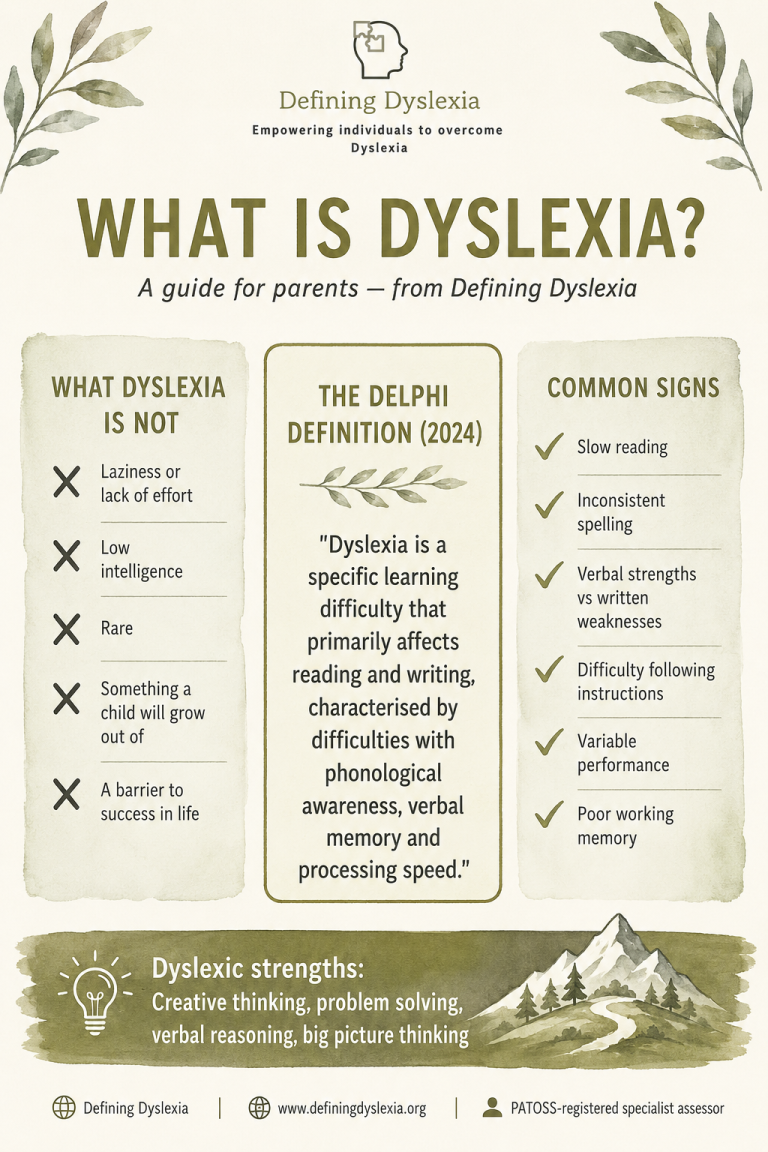
What Is Dyslexia?
The most widely used current definition comes from the Delphi Consensus (2024), which describes dyslexia as a specific learning difficulty that primarily affects reading and writing, characterised by difficulties with phonological awareness, verbal memory, and processing speed.
What dyslexia is not is equally important to understand. It is not laziness, low intelligence, or something a child will simply grow out of. It is not rare, and it is not a barrier to success. Many highly successful people across every field are dyslexic. The difference is understanding, support, and the right tools.
The good news is that with the right assessment and support, things can change significantly. A clear diagnosis helps individuals, families, and educators understand how someone learns, what they find difficult, and crucially, what they are genuinely good at. Dyslexia does not define what someone is capable of. It simply means they process language differently, and with the right support, most people make real and lasting progress.
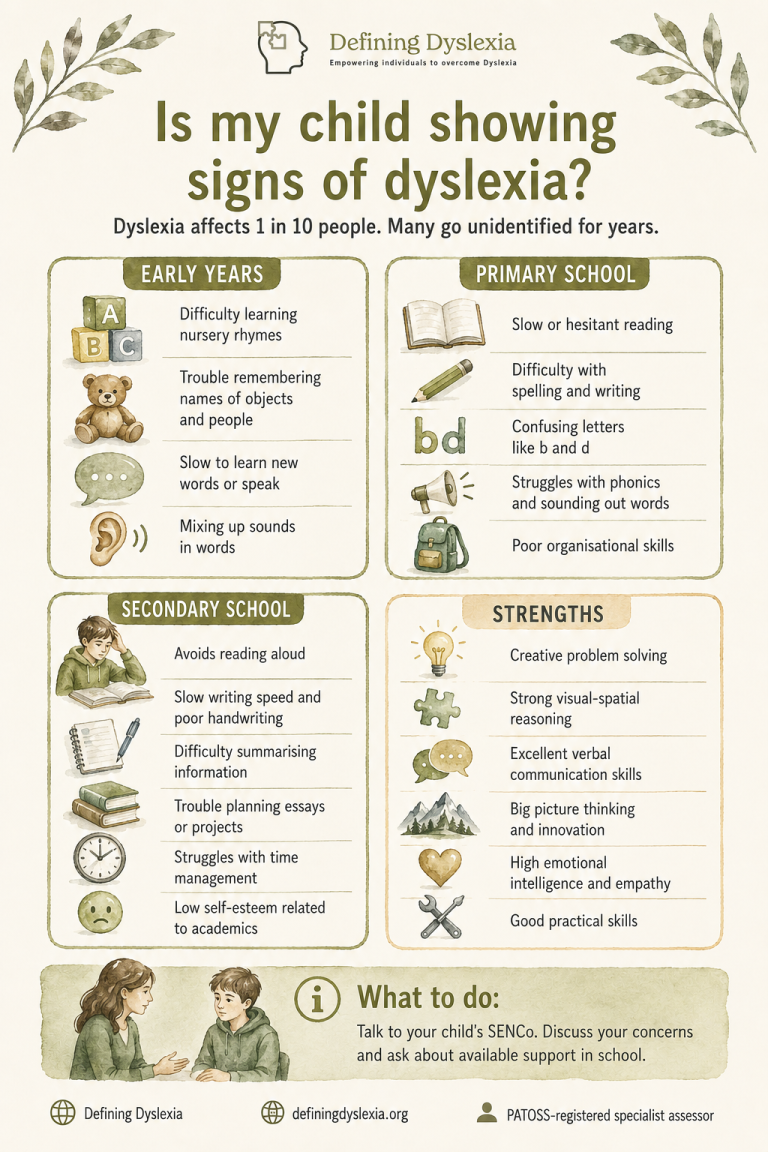
Is My Child Showing Signs of Dyslexia?
Dyslexia can look different at different ages. Here are some of the signs parents and teachers most commonly notice.
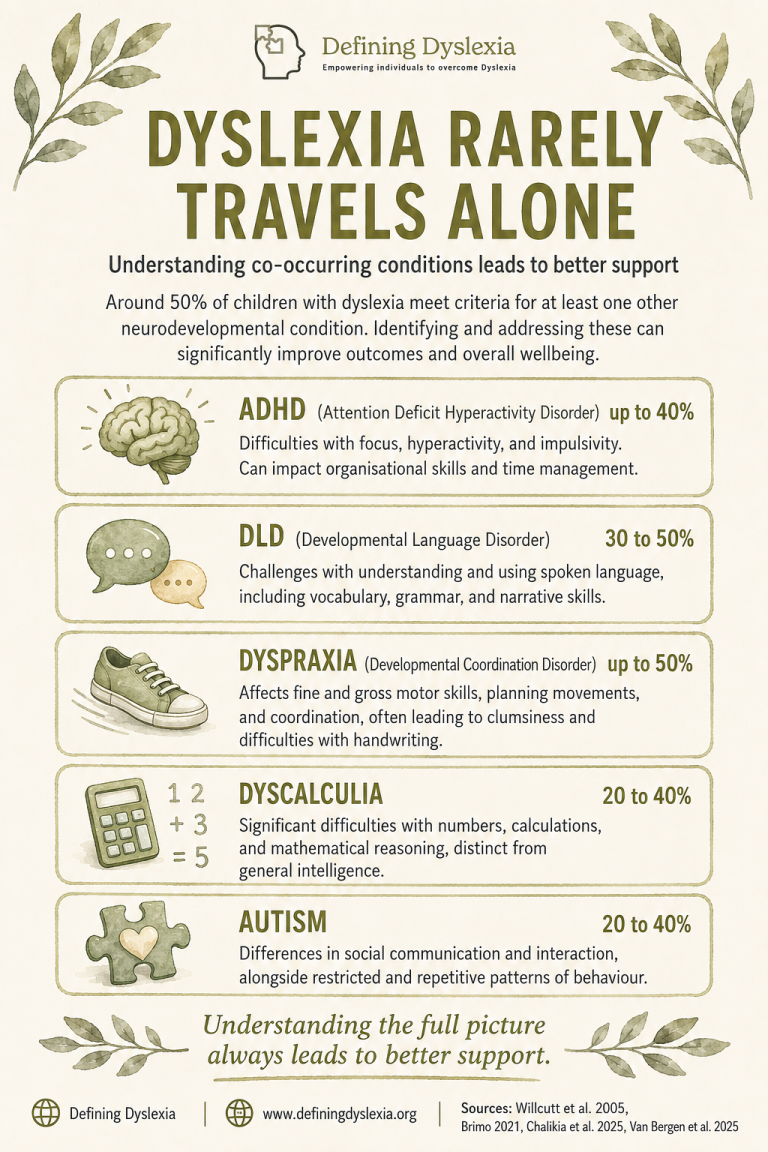
Dyslexia Rarely Travels Alone
Dyslexia often occurs alongside other learning differences. Understanding the full picture leads to better support.
Why get an assessment?
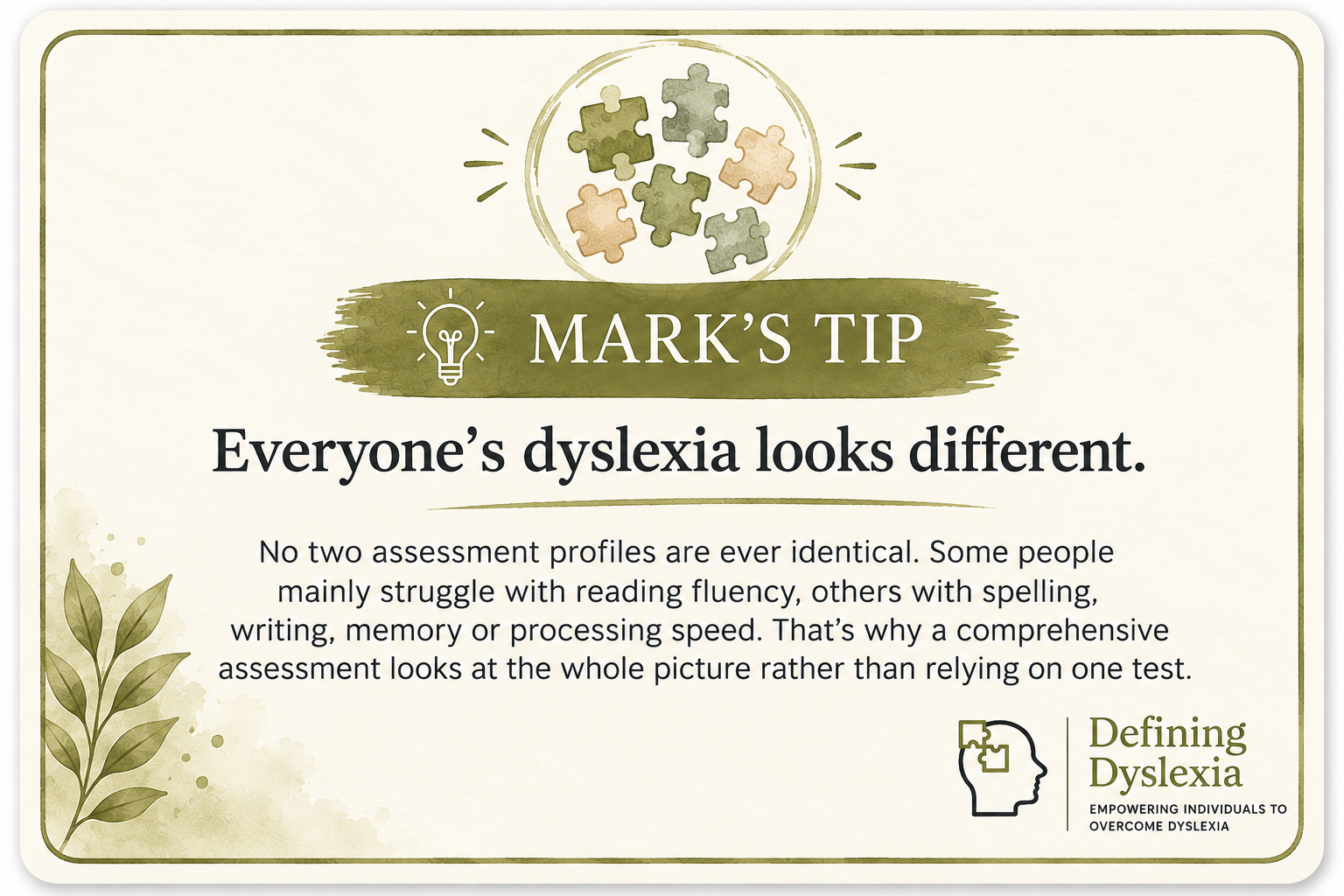
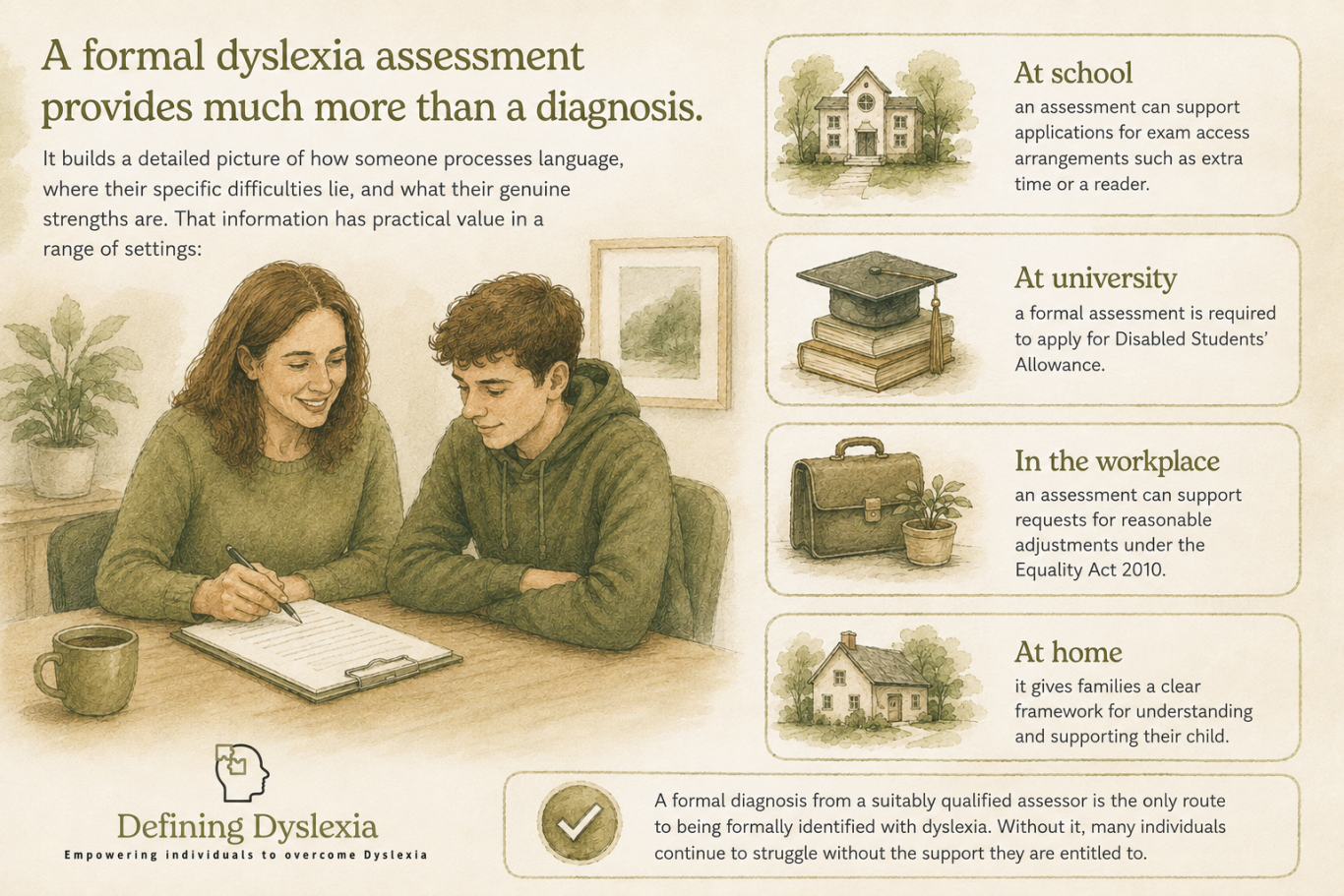
A formal dyslexia assessment provides much more than a diagnosis. It builds a detailed picture of how someone processes language, where their specific difficulties lie, and what their genuine strengths are. That information has practical value in a range of settings:
- At school, an assessment can support applications for exam access arrangements such as extra time or a reader
- At university, a formal assessment is required to apply for Disabled Students' Allowance
- In the workplace, an assessment can support requests for reasonable adjustments under the Equality Act 2010
- At home, it gives families a clear framework for understanding and supporting their child
A formal diagnosis is the only route to being formally identified with dyslexia. Without it, many individuals continue to struggle without the support they are entitled to.
Empowering Individuals to Overcome Dyslexia
How Is Dyslexia Assessed?
At Defining Dyslexia, every assessment follows a clear and straightforward process.
It begins with an initial consultation, either by phone or video call, to understand your concerns and discuss whether an assessment is the right step.
A background questionnaire is then sent to you, and, where relevant to the school or university, to gather important context before the assessment takes place.
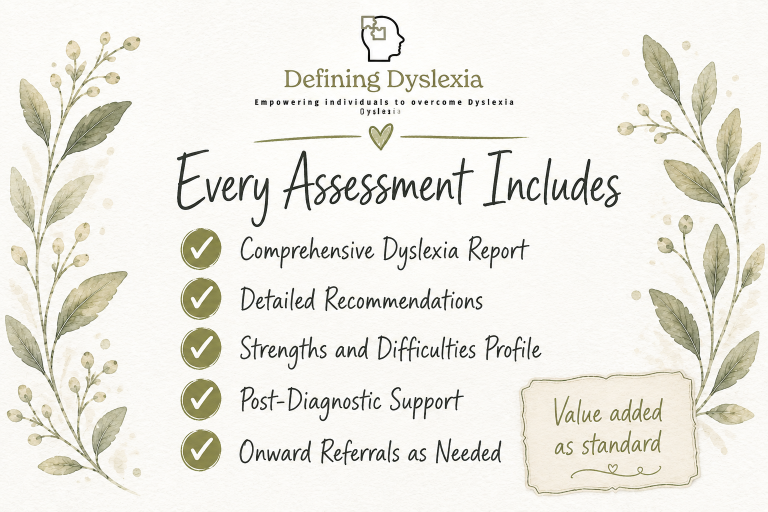
The assessment itself is a detailed, one-to-one evaluation covering reading, spelling, writing speed, phonological processing, and memory. It can be carried out face-to-face or remotely, and most assessments take around two to three hours. Every assessment concludes with a full written report setting out the findings, a clear diagnosis where appropriate, and practical recommendations tailored to the individual.
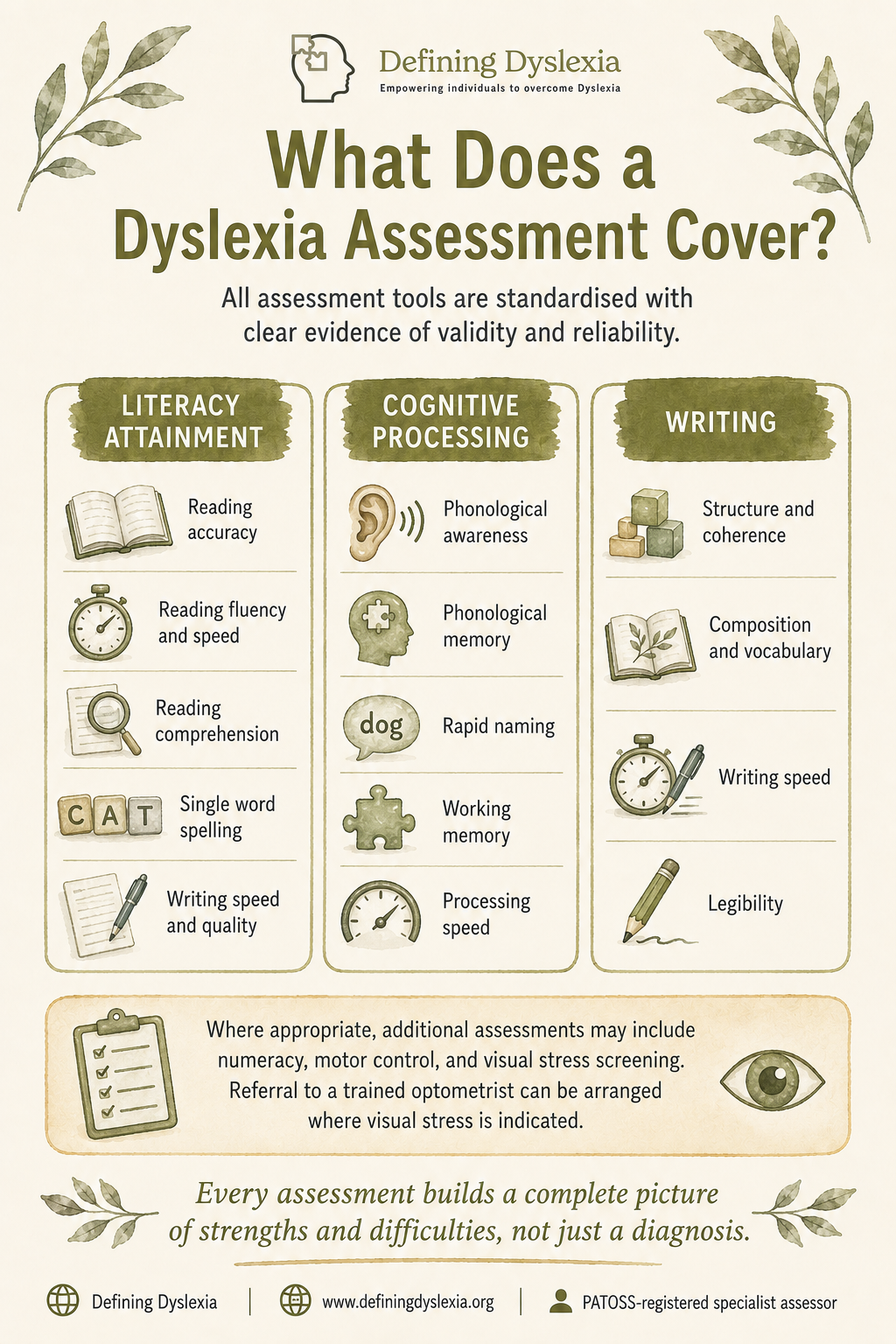
What Does The Assessment Cover?
All assessment tools are standardised, with clear evidence of validity and reliability.
Literacy attainment covers reading accuracy, reading fluency, reading speed, reading comprehension, single word spelling, and writing speed.
Cognitive processing covers phonological awareness, phonological memory, rapid naming, working memory, and processing speed.
Writing is assessed for structure, coherence, composition, speed, and legibility where relevant.
Where appropriate, additional assessments may be carried out in areas such as numeracy, motor control, or visual stress. If visual stress is indicated, referral to a trained optometrist can be arranged.
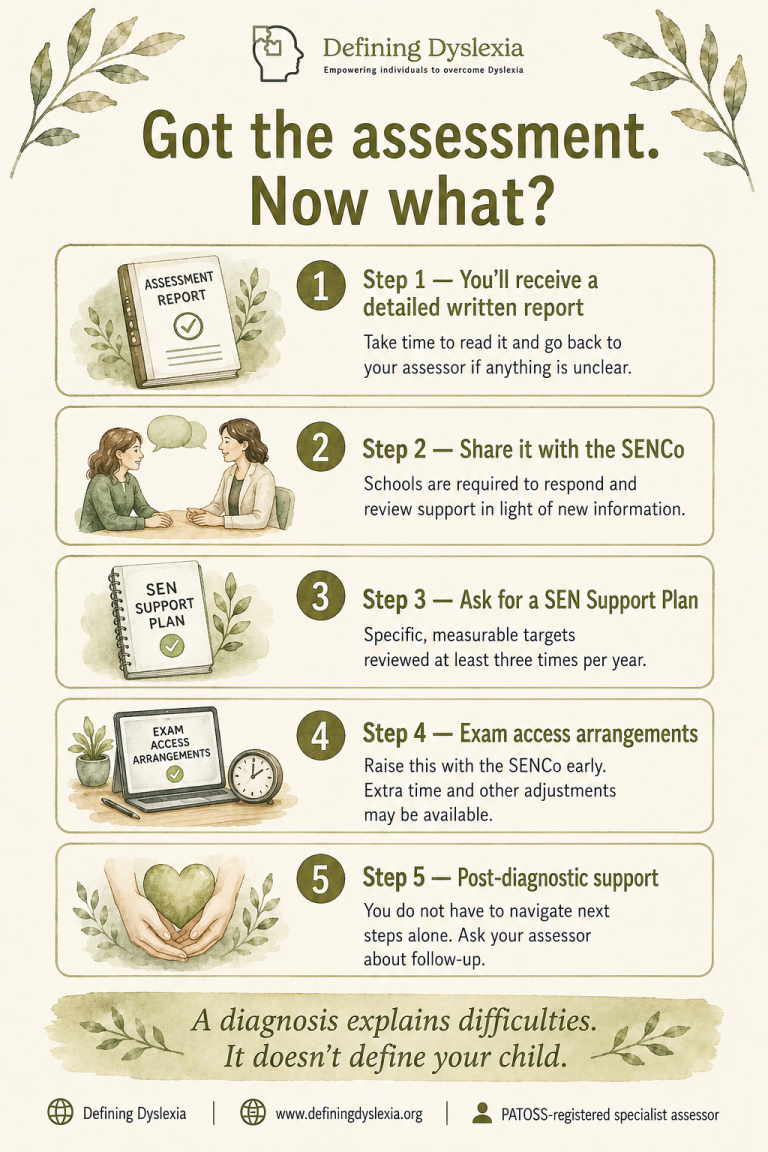
Got the Assessment Now What?
Once you have a diagnosis, here is what happens next...
Frequently Asked Questions Around Assessments
01
What age can someone be assessed for dyslexia?
Defining Dyslexia assesses children from 8 years+ and upwards, and there is no upper age limit for adults. Many adults contact Defining Dyslexia in their thirties, forties, fifties and beyond, often after years of managing difficulties without understanding why. It is never too late for answers.
02
How should I prepare for a dyslexia assessment?
No special preparation is needed. It helps to be well rested and to have eaten beforehand. For adults, it can be useful to jot down any specific concerns or examples of difficulties you want to mention, though this is not essential. The assessment is a conversation as much as an evaluation, and there is no way to pass or fail.
03
Will the assessment feel stressful?
Most people find the assessment significantly less daunting than they expected. The process is one-to-one, calm, and entirely non-judgmental. For children, the assessor will take breaks where needed and many find the individual attention a positive experience. For adults, the assessment is often described as a relief, finally having space to explore difficulties without pressure or judgement.
04
How long does it take to receive the report after the assessment?
Reports are typically provided within two to three weeks of the assessment taking place. If you have a specific deadline, for example an upcoming EHCP review, driving theory test, exam access arrangement application, or DSA submission, please mention this at booking stage and we will do our best to accommodate it.
05
What if the assessment does not identify dyslexia?
A formal assessment is valuable regardless of the outcome. If dyslexia is not identified, the assessment will still provide a detailed cognitive profile showing how you or your child processes information, where genuine strengths lie, and what other factors might be contributing to the difficulties. That information has real practical value even without a dyslexia identification, and onward referral pathways can be discussed where appropriate.
06
Who can I share the
assessment report with?
The report belongs to you and you decide who sees it. Many families share it with the school SENCo, university disability service, employer, or local authority as appropriate. Mark is happy to discuss how best to use the report for your specific situation after the assessment has taken place.
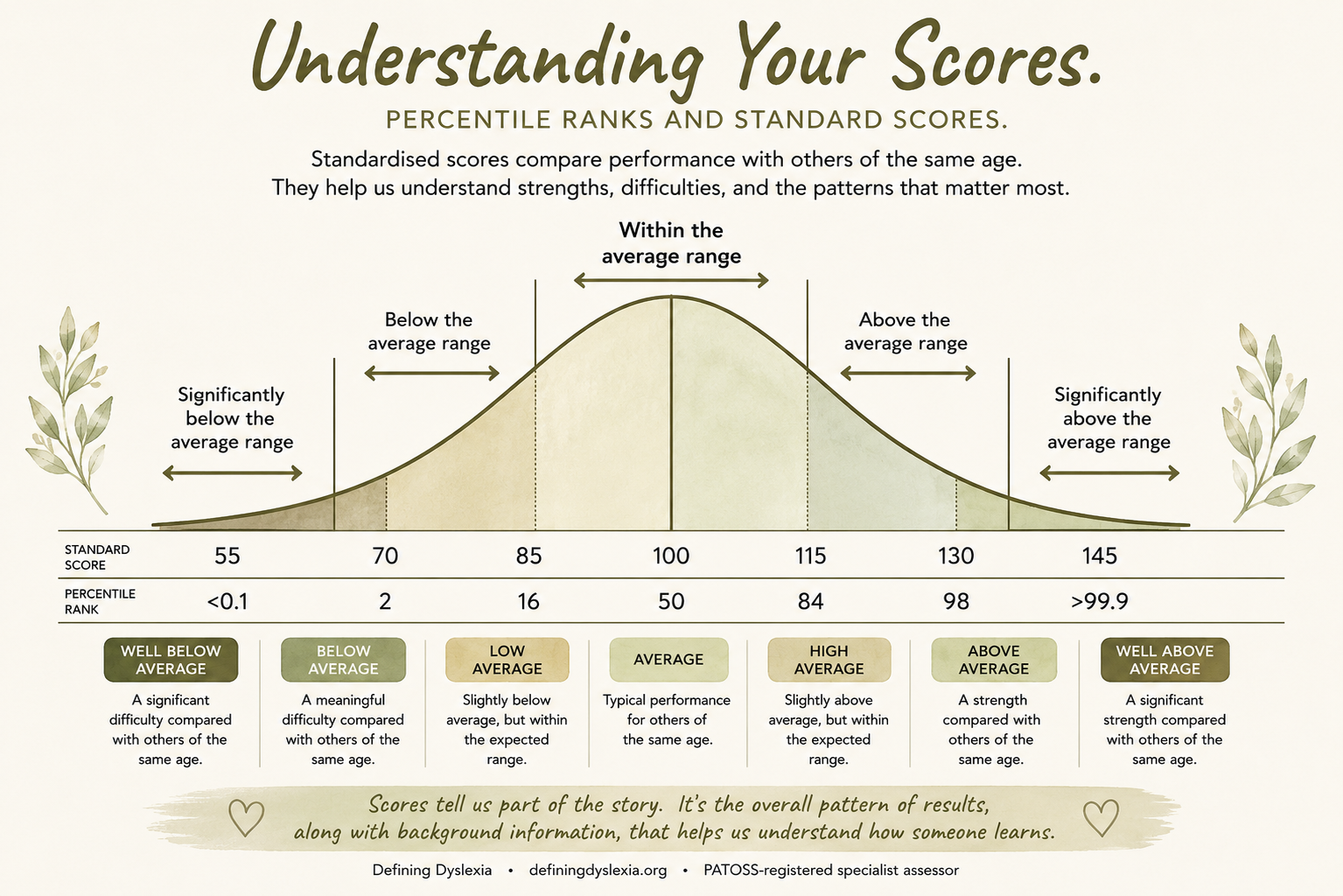
What do the scores in a dyslexia assessment report mean?
Following an assessment, you’ll receive a detailed report containing standardised scores across a range of literacy and cognitive skills. Understanding those scores can feel overwhelming at first.
About Your Assessor
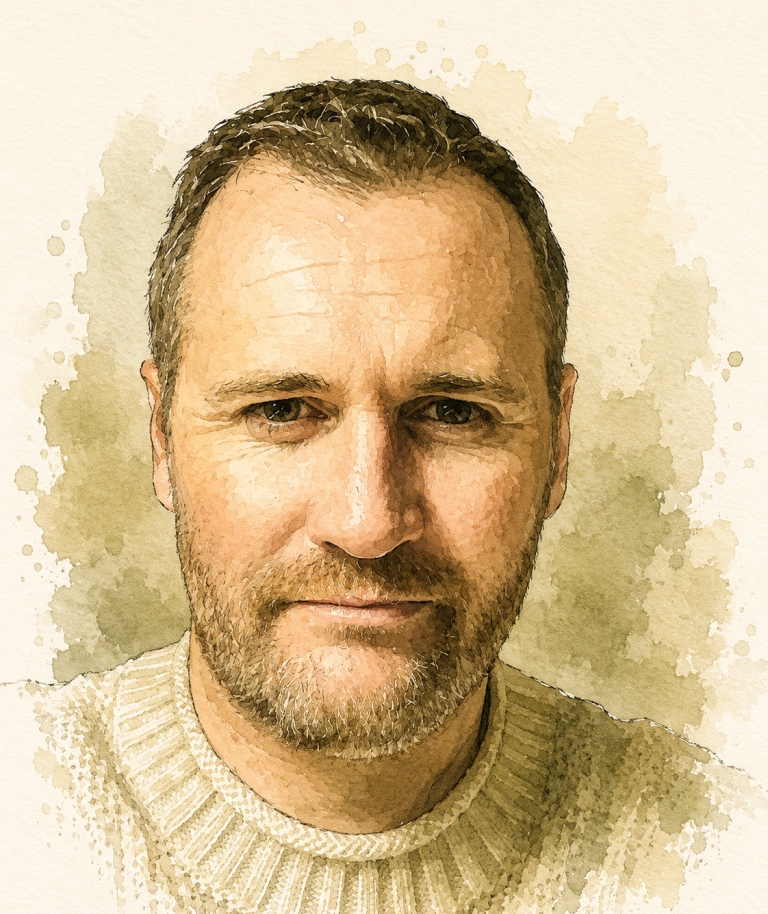
Every Defining Dyslexia assessment is carried out by Mark, a PATOSS-registered specialist assessor with fifteen years of experience supporting children, young people, and adults with dyslexia and other learning differences. Mark holds an APC and works to the standards set by SASC, the body that governs SpLD assessment quality across the UK. Mark's background as a former SENCo means he understands the school system from the inside, and brings that knowledge to every assessment and report he writes.
Where are assessments available?
Face-to-face assessments for children are available across two regions (South Yorkshire and Cambridgeshire) covering a wide area across both. Remote assessments are available for families anywhere in the UK.
South Yorkshire and surrounding areas
Cambridgeshire and surrounding areas
Anywhere in the UK
The Power of Dyslexia
Personally, I think this is a great video by the Made by Dyslexia Team.
Source: www.madebydyslexia.org
Get in touch
E-mail: Mark@definingdyslexia.org
We operate virtually across the UK, providing accessible support wherever you are. For in-person appointments, we serve Sheffield, Peterborough, and the surrounding area. Contact us to learn more!