What Is It Like to Be Dyslexic at Secondary School?
Secondary school brings a step change in demands. There are more subjects, more teachers, more reading, and more writing under pressure. For a young person with dyslexia, that step change can feel enormous. This is a picture of what that can look like, drawn from common experience rather than any one real student.
Year 8: keeping up quietly
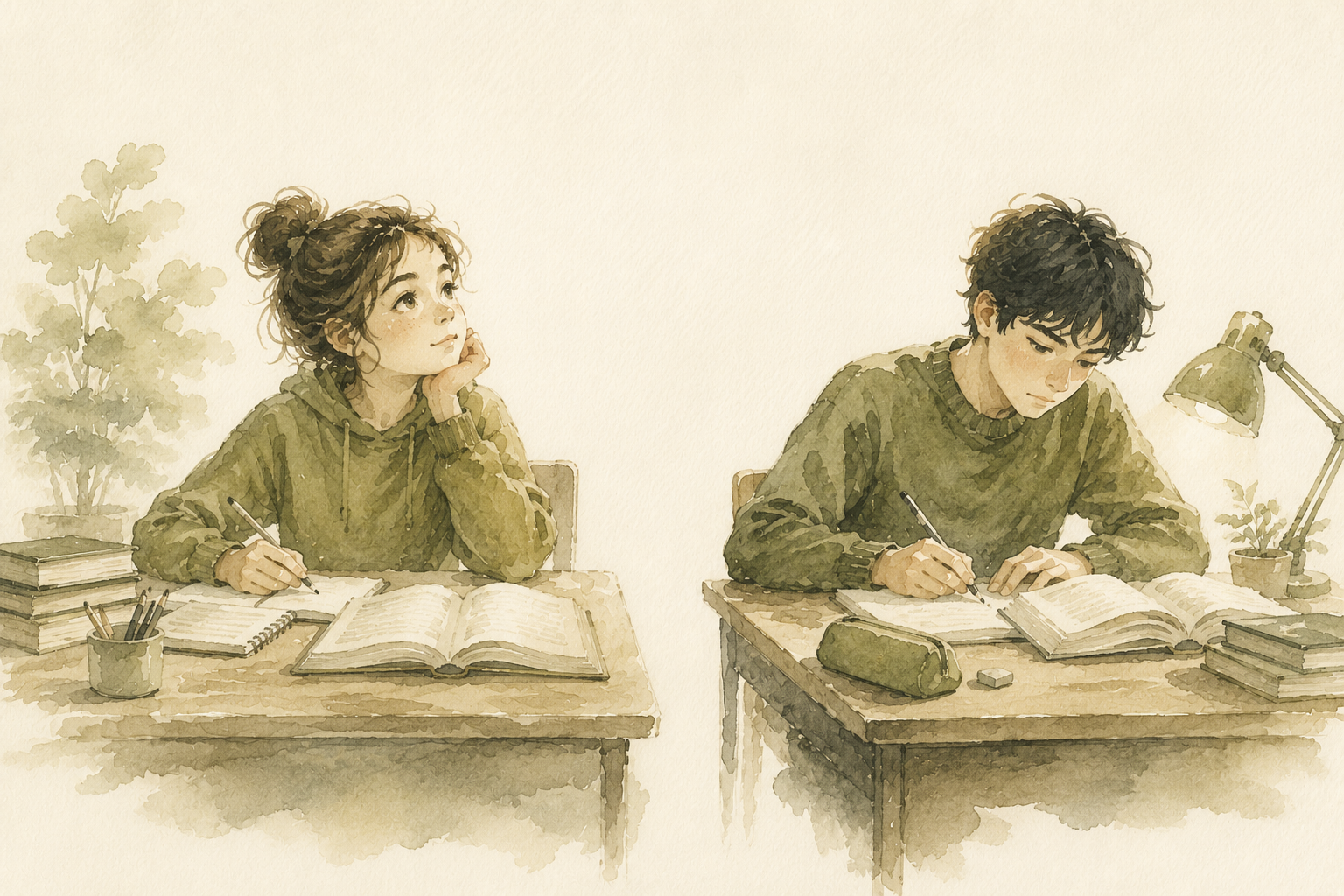
Picture a student we will call Josh. He is thirteen and genuinely enjoys school. He is funny, well-liked and sharp in conversation. In science he can hold his own in any discussion. In English, however, the gap between what he knows and what he can put on paper is growing. He reads slowly and rereads the same line several times before it sticks. Note-taking in lessons is a constant battle, since by the time he has written one sentence the teacher has moved on. He stays quiet about all of this. He has learned that asking for things to be repeated draws attention he does not want. By the time he gets home, the effort of the day has worn him out. Homework takes twice as long as it should. He tells his parents he is fine.
Year 11: the pressure builds
Now picture a student we will call Priya. She is fifteen and exams are on the horizon. She has worked hard throughout secondary school and her teachers like her. What they may not fully see is the effort behind that. Every essay takes longer than it should. She rereads her own work repeatedly, checking for mistakes she knows are there but cannot always find. Revision is difficult because making notes from textbooks is slow and exhausting. In the exam hall she reads questions carefully, then reads them again. Time is the thing she never quite has enough of. She has not been assessed for dyslexia. She has simply always assumed she is not as good at this as everyone else.
The hidden effort at secondary
Josh and Priya are not struggling because they are less able. They are struggling because the system asks them to show what they know through reading and writing, and that is precisely where dyslexia makes things harder. The ability is there. The gap is between ability and output. Additionally, secondary school rewards speed and volume in a way primary school does not. That gap tends to widen quietly rather than announce itself.
The strengths that remain
Both Josh and Priya have real strengths. Josh's ability to reason through a problem out loud is exactly the kind of thinking that serves people well beyond school. Priya's persistence and attention to her own work reflect qualities that matter long after exams are over. Dyslexia does not change what a young person is capable of. It changes the conditions they need to show it.
What helps at secondary
Access arrangements such as extra time and a reader can make a real difference, but they require a formal assessment to be put in place. Understanding from individual teachers matters too. A student who does not have to fear being put on the spot to read aloud is a student who can focus on the learning. Where dyslexia has not yet been identified, a full assessment at any point in secondary school is still worthwhile. It is never too late to understand the profile.
A final word
If Josh or Priya sound familiar, it is worth acting on that. A young person who has spent years working harder than their peers just to keep up deserves to know why, and to have the right support in place. Understanding the profile does not lower the bar. It levels the playing field.
How Defining Dyslexia can help
At Defining Dyslexia, we offer full diagnostic SpLD assessments for children and adults across Sheffield, South Yorkshire, and Peterborough, with remote assessments available across the UK. Every assessment includes time at the end to talk through findings together, so you leave with a clear understanding of the results, not just a document to decipher on your own.
If you have questions about your child's scores, or you are wondering whether an assessment might be the right next step, we are happy to have an initial conversation. There is no obligation, and sometimes a short chat is all it takes to feel clearer about where to go next.You can get in touch via the contact page at https://www.definingdyslexia.org/contact-us/