What Is PATOSS and Why Does It Matter When Choosing a Dyslexia Assessor?
When you start looking for a dyslexia assessor, you will quickly encounter a set of terms and abbreviations that can feel overwhelming. PATOSS, BDA, Dyslexia Guild, Level 7, practising certificate. It is a lot to take in, particularly when you are already navigating a system that feels complex.
This post explains what these terms mean, why they matter, and what to look for when choosing a dyslexia assessor for your child or yourself.
What Is PATOSS?
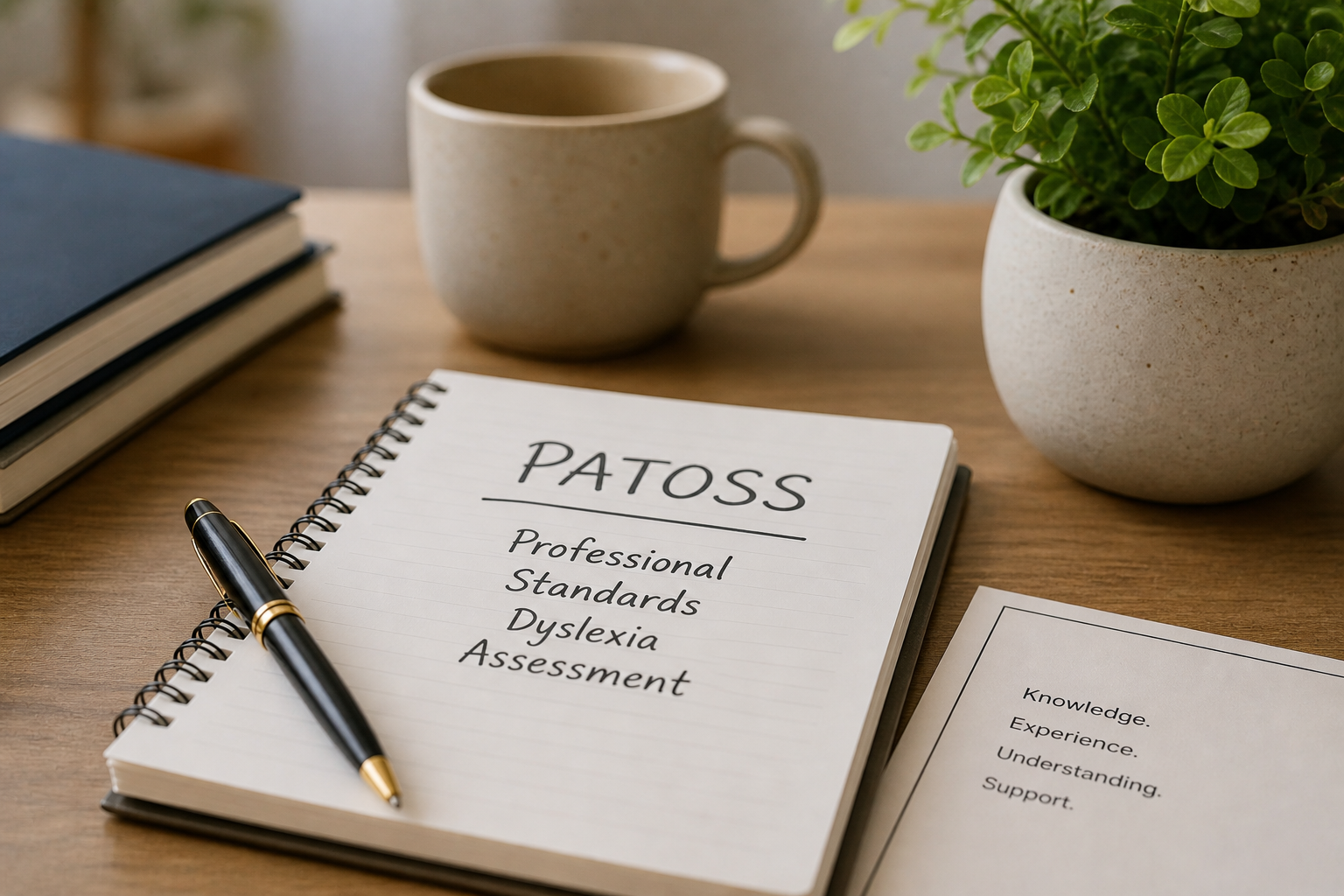
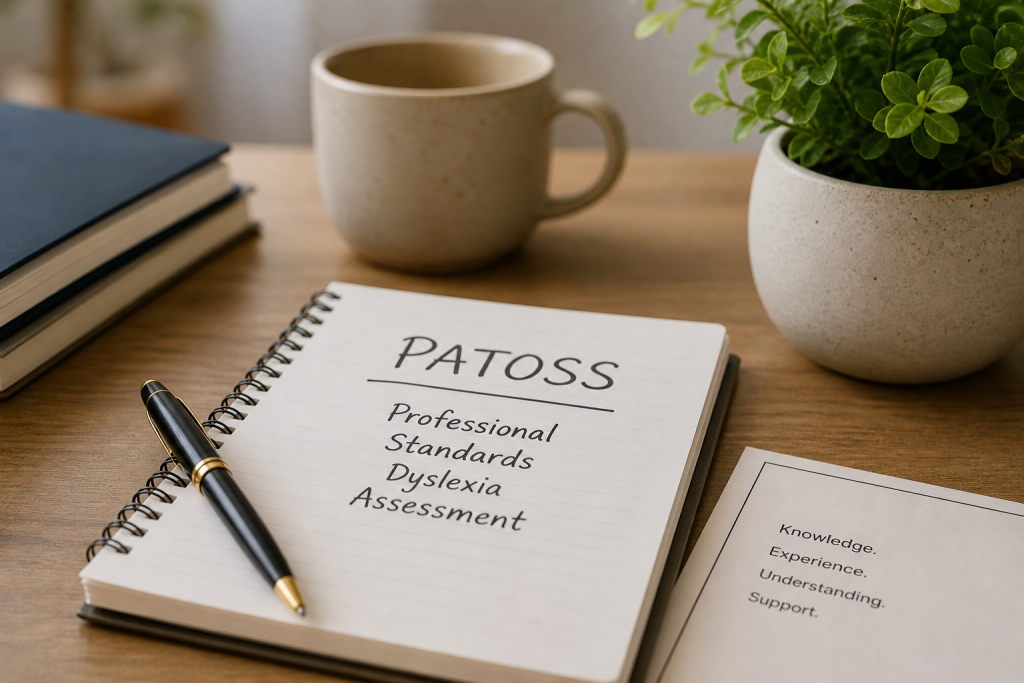
PATOSS stands for the Professional Association of Teachers of Students with Specific Learning Difficulties. It is one of the main professional bodies that registers and regulates specialist dyslexia assessors in the UK.
A PATOSS-registered assessor holds a recognised Level 7 SpLD qualification and a current practising certificate. They adhere to professional standards in assessment practice and are accountable to their registering body. Additionally, they are required to maintain their registration through ongoing continuing professional development, meaning their knowledge and practice remain current.
Furhermore, PATOSS operates a free, searchable database of registered assessors. You simply register on their website to access it. This means you can verify any assessor you are considering, or search for a qualified assessor in your area, directly and independently. It is a straightforward and reassuring step that is well worth taking before you book.
Are There Other Registering Bodies?
Yes. PATOSS is not the only recognised body. The British Dyslexia Association (BDA) and the Dyslexia Guild operate similar registration and quality assurance frameworks. An assessor registered with any of these three bodies is working to the same professional standard.
When you see that an assessor is registered with PATOSS, the BDA, or the Dyslexia Guild, it tells you something important and practical — that their report will be accepted. Accepted for exam access arrangements, accepted for university Disabled Students' Allowance applications, and accepted for workplace adjustments under the Equality Act 2010.
What Does a Practising Certificate Mean?
A practising certificate is an annual requirement for registered assessors. It confirms that the assessor has maintained their professional development, kept their practice current, and met the standards required by their registering body.
It matters for a simple reason. Assessment practice evolves. Tests are updated, guidance changes, and professional standards develop over time. A practising certificate is the mechanism that ensures a registered assessor stays current — and that the report they produce meets the standards expected today, not five years ago.
Additionally, holding a practising certificate means the assessor carries professional liability insurance and has undergone DBS checking. When you instruct a registered assessor, you are engaging a significantly regulated professional — not simply someone with a qualification.
What Is a Level 7 SpLD Qualification?
Level 7 is a postgraduate level qualification. For dyslexia assessors, it represents specialist training in the assessment of specific learning difficulties, going well beyond general teaching or learning support experience.
It is the qualification standard required for an assessor's report to be accepted for formal purposes such as exam access arrangements and DSA. Additionally, it ensures that the assessor has been trained specifically in the cognitive and literacy profile central to a dyslexia assessment — not just in supporting learners with SpLDs in a classroom context.
Why Does Registration Matter in Practice?
This is the most important question — and the answer is straightforward.
A report produced by an assessor who is not registered with a recognised professional body may not be accepted. Not by exam boards, not by universities, and not by employers considering workplace adjustments. An unregistered report can leave families having paid for an assessment that cannot open the doors they needed it to open.
Additionally, registration provides accountability. If concerns arise about an assessment or a report, there is a professional body to raise them with. That layer of oversight does not exist outside of registration.
What Should I Ask Before Booking a Dyslexia Assessment?
Before booking, it is entirely reasonable — and advisable — to ask the following.
Are you registered with PATOSS, the BDA, or the Dyslexia Guild? This is the most important question. A reputable assessor will answer it clearly and without hesitation.
Do you hold a current practising certificate? Registration without a current practising certificate is not sufficient. Both are required.
What does the assessment involve and what will the report cover? A good assessor will explain this clearly before you commit.
What are your turnaround times for reports? This varies between assessors and it is worth knowing upfront, particularly if you are working to a deadline for exam arrangements or a DSA application.
Do you offer a follow-up conversation to discuss findings? A written report is most useful when accompanied by a clear explanation. Not all assessors include this as standard, so it is worth asking.
A good assessor will welcome these questions. If an assessor is reluctant to answer them directly, that is worth noting.
A Final Word
Choosing a dyslexia assessor is an important decision. The report that comes from a good assessment can open doors in education, university, and employment — sometimes for life. Taking a little time to check registration and ask the right questions beforehand is always worthwhile.
You are not being difficult by asking. You are being thorough — and that is exactly the right approach.
At Defining Dyslexia, I am registered with PATOSS, hold a current practising certificate, and hold a Level 7 SpLD qualification. Every assessment I carry out meets the standards required for exam access arrangements, DSA applications, and workplace adjustments. Face-to-face appointments are available across Sheffield and South Yorkshire, and across Peterborough and Cambridgeshire, with remote assessments available nationwide.
If any of this sounds familiar, it's worth getting in touch. Sometimes the most important thing is simply having someone take the whole picture seriously.