How to Find a Dyslexia Assessment Near You: Online and In-Person Options Explained for Parents and Adults
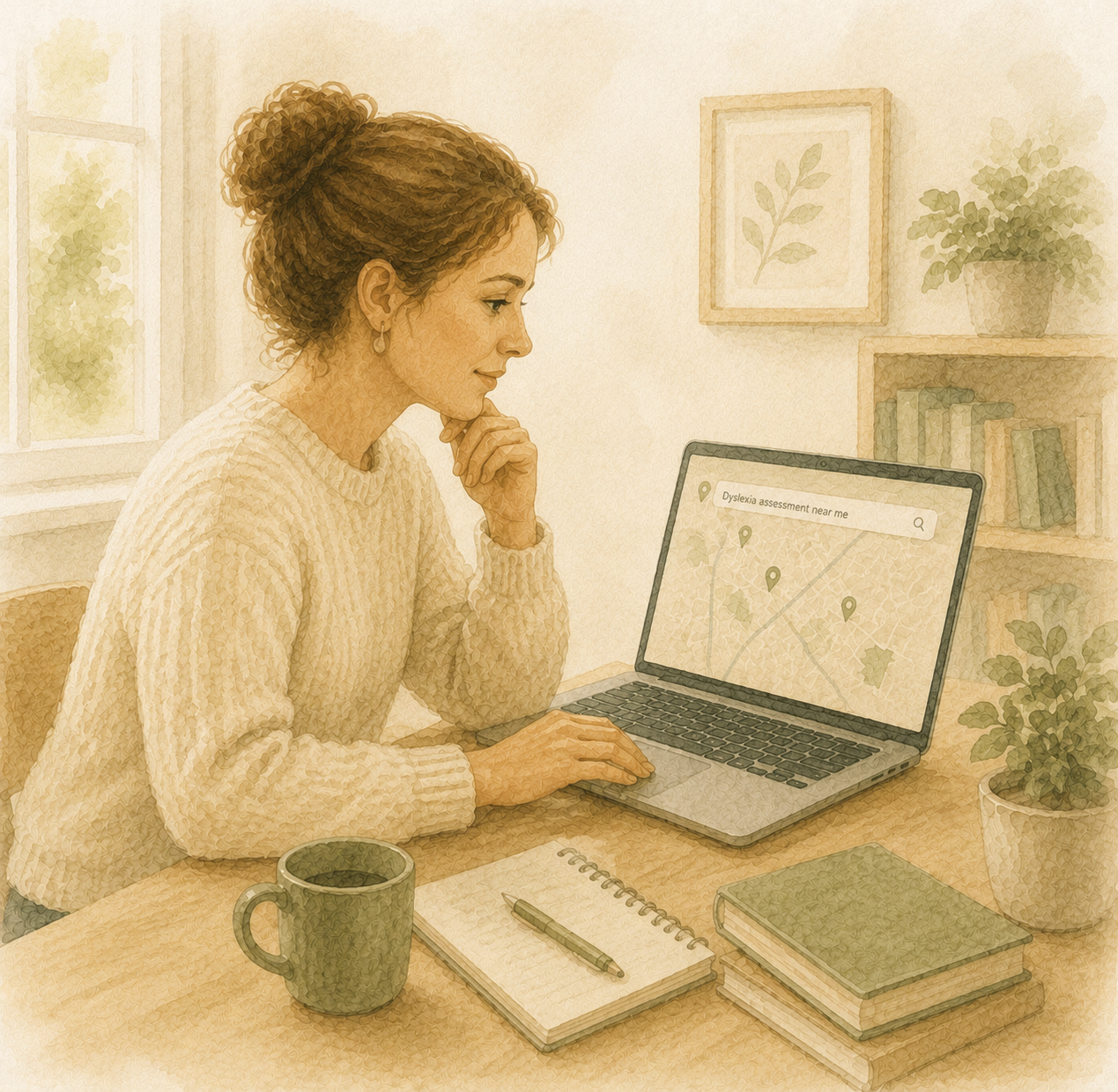
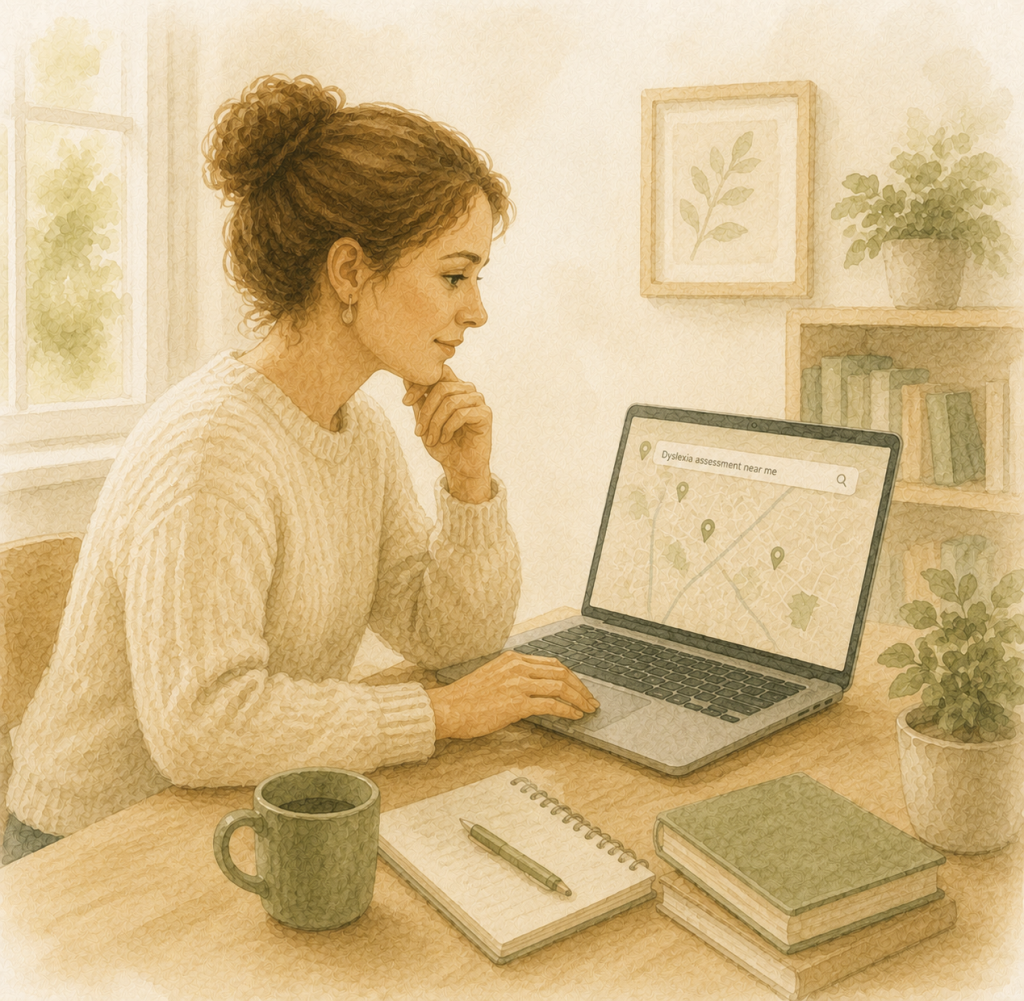
When parents and adults start looking for a dyslexia assessment, the first search is usually some version of "dyslexia assessment near me." It feels like the most practical place to start. However, proximity is only one part of the picture, and in some cases it matters less than you might think. This guide explains your options, what to look for in an assessor, and how to compare costs fairly.
In-person or online: what is the difference?
A face-to-face assessment takes place at a location you travel to, usually the assessor's own space or a clinic setting. An online assessment is conducted via video call, with standardised tests delivered remotely using validated digital versions of the same tools used in person. Both approaches can produce a report that meets the same professional standards, provided the assessor is appropriately qualified.
The choice between the two often comes down to personal preference and practical circumstances. Some families and adults find face-to-face easier, particularly for younger children or those who find screens distracting. Others find remote assessment more convenient, especially where travel time or distance is a barrier. Neither is inherently better, and the quality of the assessment depends on the assessor rather than the format.
What to look for in an assessor
Regardless of whether you choose in-person or remote, the most important thing to check is whether the assessor holds an Assessment Practising Certificate, known as an APC, issued through a recognised body such as PATOSS, BDA or Dyslexia Guild. This certificate confirms that the assessor has reached the required standard of training and practice, and that they are subject to ongoing professional requirements.
You should also check whether the assessor uses current, standardised assessment tools. The tests used in a dyslexia assessment have version numbers and publication dates, and older versions may not produce results that meet current SASC or JCQ standards. A reputable assessor will be transparent about what tools they use.
Additionally, it is worth checking whether the assessor produces reports in a format that schools and exam boards will accept. If your primary reason for seeking an assessment is to support an access arrangements application, the report needs to meet JCQ Form 8 requirements specifically.
Does location still matter?
For in-person assessments, yes. You will need to be able to travel to the assessor's location, or find one who offers home visits. For remote assessments, location becomes largely irrelevant. A qualified assessor based anywhere in the UK can assess you or your child via video call, and the report carries exactly the same weight. Same process, jusut online. The decision on which one is best is based on what suits you best.
Overall, online assessments opens up significantly more choice, particularly for parents and adults in areas where local provision is limited, or where waiting times for nearby assessors are long. To see where we operate look at out assessment pages, or for remote assessments look here.
What about cost?
Dyslexia assessment costs vary across the UK, and it is worth understanding what you are comparing when you look at different prices. A full diagnostic assessment typically costs between £450 and £700, though prices outside this range exist at both ends. A lower price does not always mean lower quality, but it is worth asking what is included.
Some assessors charge separately for the report, for follow-up conversations, or for school liaison letters. Others include these as standard. Additionally, some assessors offer payment plans, which can make the cost more manageable without requiring the full amount upfront.
At Defining Dyslexia, we believe pricing should be straightforward and transparent. You can find full details on our pricing page, including what is included in every assessment and the payment options available. There are no hidden costs, and we are always happy to talk through what is involved before you commit to anything. See our pricing page for more information.
Face-to-face assessments with Defining Dyslexia
We offer in-person assessments for children, young people, and adults across Sheffield and South Yorkshire, and across Peterborough and Cambridgeshire. If you are based in either of these areas and would prefer a face-to-face appointment, we would be glad to discuss availability.
Remote assessments with Defining Dyslexia
We also offer remote assessments for children, young people, and adults anywhere in the UK. Remote sessions use the same standardised assessment tools and produce the same quality of report as our in-person work. If you are unsure whether a remote assessment would work for you or your child, we are happy to talk it through before you decide.
A final word
Finding the right assessor matters more than finding the nearest one. A little time spent checking qualifications, understanding what is included, and asking the right questions upfront will make the whole process feel much more manageable. Get in touch and we can answer any questions you have before you or your child takes the next step.
How Defining Dyslexia can help
At Defining Dyslexia, we offer full diagnostic SpLD assessments for children and adults across Sheffield, South Yorkshire, and Peterborough, with remote assessments available across the UK. Every assessment includes time at the end to talk through findings together, so you leave with a clear understanding of the results, not just a document to decipher on your own.
If you have questions about your child's scores, or you are wondering whether an assessment might be the right next step, we are happy to have an initial conversation. There is no obligation, and sometimes a short chat is all it takes to feel clearer about where to go next.
You can get in touch via the contact page at https://www.definingdyslexia.org/contact-us/