Dyslexia Assessments for Children and Young People
If you are worried about your child's reading, writing, or spelling (or if school has raised concerns that haven't yet led anywhere) you are in the right place. A formal dyslexia assessment can give you the answers you have been looking for, and the evidence needed to make sure your child gets the right support.
You know your child best
Many parents spend months (sometimes years) watching their child struggle before anyone takes their concerns seriously. School may have said they are fine. The screener may have come back without significant concerns. But something still doesn't add up.
If your child is working hard but not making the progress you would expect, if homework is a nightly battle, or if there is a clear gap between what they can do verbally and what they produce in writing — those instincts are worth listening to. A formal assessment exists precisely to find out what is going on beneath the surface.
How much does an
assessment cost?
A full dyslexia assessment with Defining Dyslexia costs £495. This includes the assessment session and a comprehensive written report with practical recommendations. There are no hidden costs and no additional charges.
Assessments can be carried out in your home, at your child's school, or at a suitable venue local to you. Where a venue needs to be booked, a small additional fee may apply. This will always be discussed and agreed with you before anything is confirmed.
For adult assessments that include screening for co-occurring conditions such as ADHD or dyspraxia, a small additional fee also applies. This will be discussed with you at enquiry stage.
If you would like to talk through costs before booking, you are very welcome to get in touch.
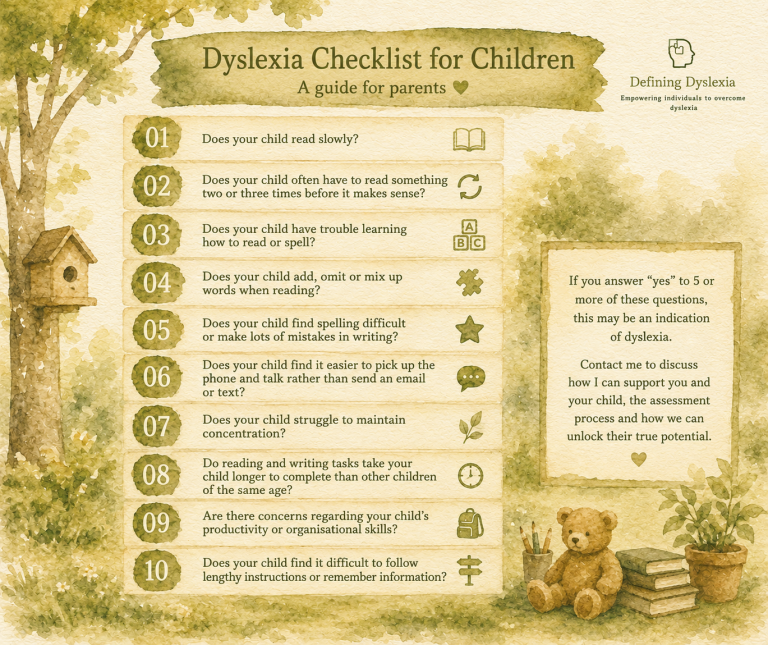
What might dyslexia look like in children?
Dyslexia presents differently at different ages, and no two children are exactly alike.
Common signs include:
In early years and primary school — difficulty learning letter sounds, slow or hesitant reading, inconsistent spelling, confusing similar letters, and struggling to follow multi-step instructions.
In secondary school — avoiding reading aloud, slow writing speed, difficulty planning and organising written work, inconsistent performance, and a growing sense of falling behind peers despite real effort.
Across all ages — a child who is clearly bright and capable verbally but whose written work doesn't reflect what they know. A child who tries hard but seems to make little progress. A child whose confidence is quietly eroding.
If several of these feel familiar, a formal assessment is a valuable next step.
What does a child
dyslexia assessment involve?
A dyslexia assessment with Defining Dyslexia is thorough, professional, and entirely non-threatening. Mark has fifteen years of experience working with children and young people — he knows how to put them at ease and get the best from them on the day.
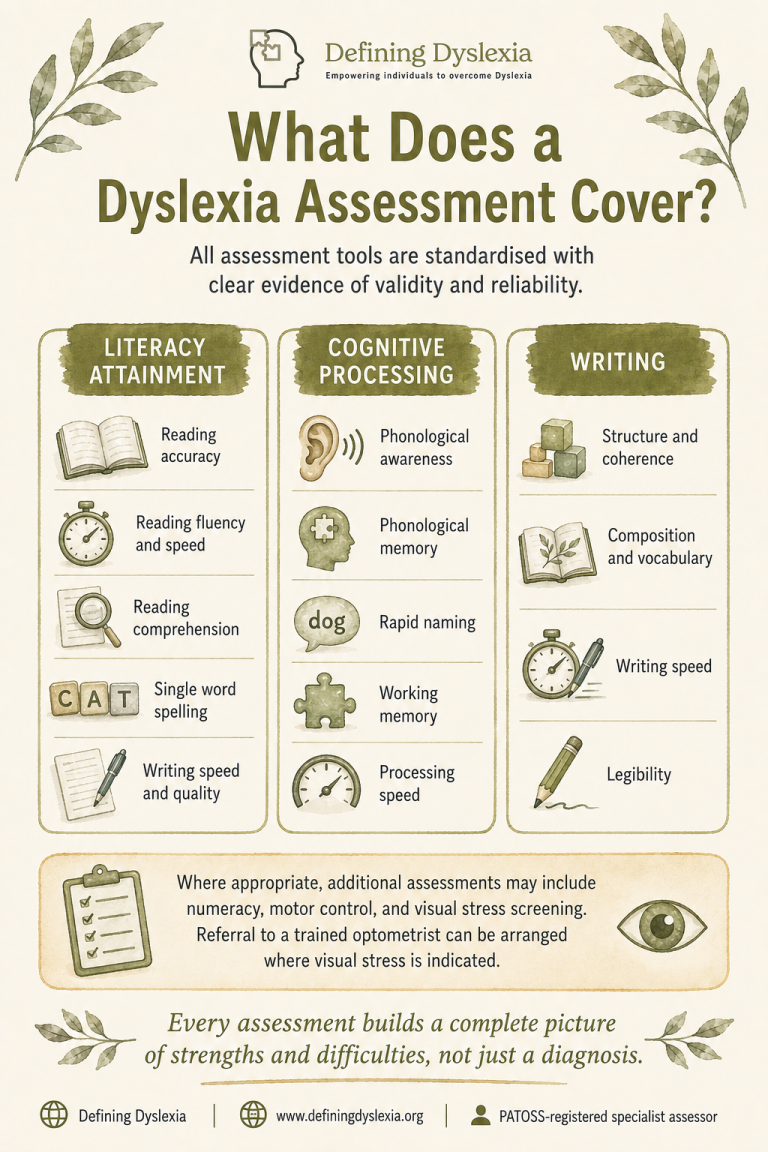
The assessment typically takes two to three hours and looks at your child's cognitive profile alongside standardised literacy testing. This includes phonological processing, working memory, processing speed, reading accuracy and fluency, spelling, and writing. Together these build the full diagnostic picture (not just what your child can or cannot do), but also why.
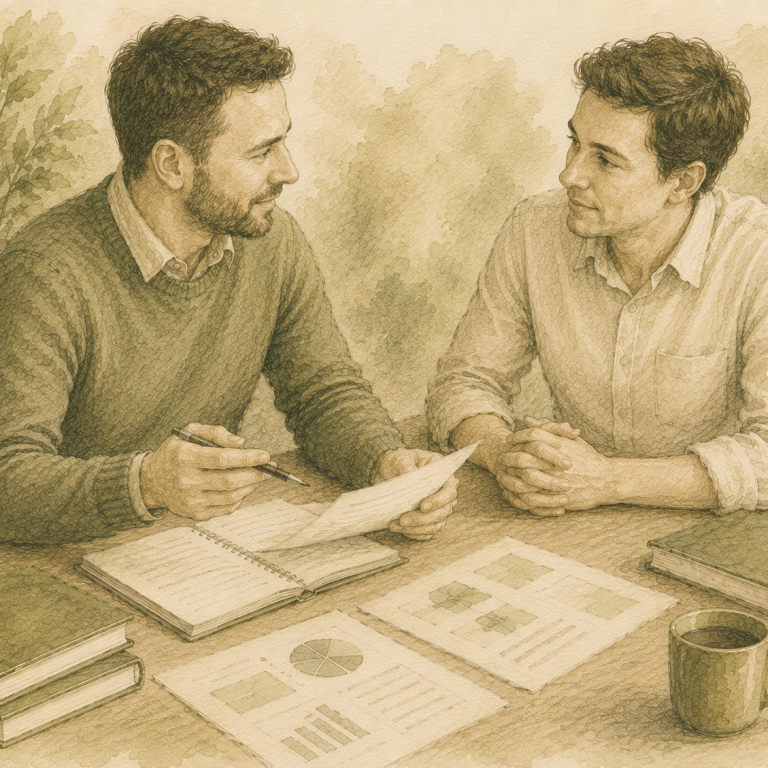
Before the assessment, Mark will gather background information from you about your child's history, development, and current difficulties. Your knowledge of your child is an essential part of the picture.
What does the
report include?
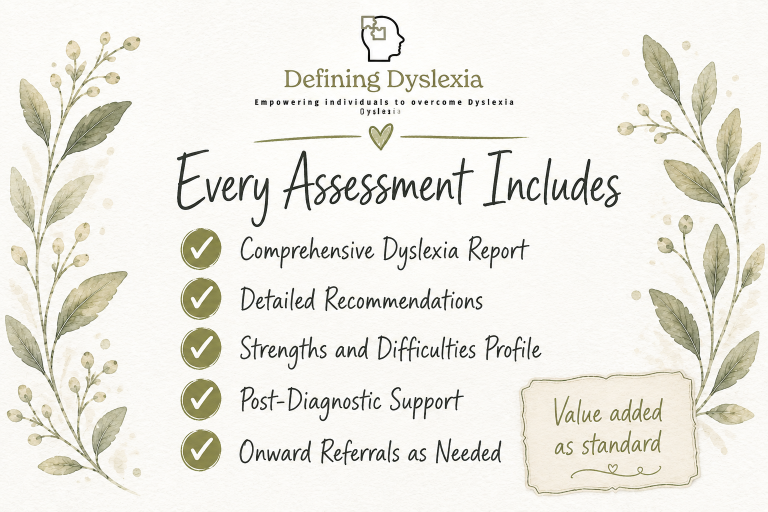
Every Defining Dyslexia assessment report for children includes:
- A full cognitive profile with standardised scores
- A formal identification of dyslexia and any co-occurring difficulties where evidenced
- A strengths and difficulties profile
- Practical, evidence-based recommendations for school and home
- Guidance on exam access arrangements including extra time and a reader or scribe
- A school liaison letter summarising key findings and recommendations
- Post-diagnostic support to help you and your child's school understand and act on the report

Why the full picture matters?
In school — a formal assessment report gives your child's school the specific evidence they need to put targeted support in place. It moves the conversation from general concern to clear action. Additionally it provides the evidence base for exam access arrangements (including extra time, a reader, or a scribe) which can make a significant difference at every stage of education.
At secondary school and sixth form — access arrangements for GCSEs and A levels require current evidence of need. A formal assessment report provides exactly that, and ensures your child is not disadvantaged in high-stakes examinations.
For your child's confidence — perhaps most importantly, a formal identification gives your child a framework for understanding themselves. Many children describe the relief of finally knowing why things have been hard, and the difference it makes to realise they are not lazy, not slow, and not less capable than their peers. Their brain simply works differently.
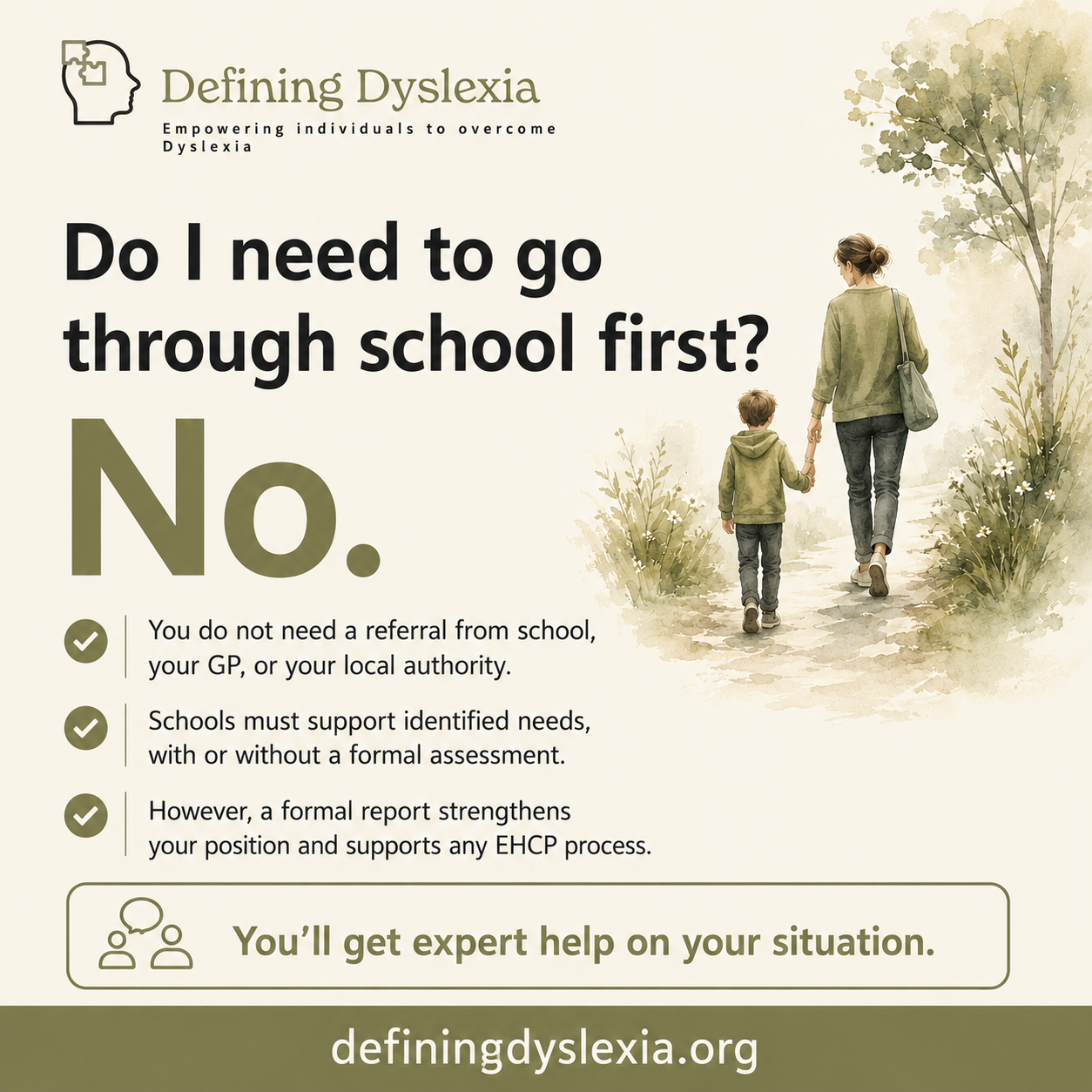
Do I need to go through school first?
No. You do not need a referral from school, your GP, or your local authority to access a private assessment. You can contact Defining Dyslexia directly at any time.
It is also worth knowing that a formal diagnosis is not required for a school to support your child — schools have a legal duty to identify and meet special educational needs regardless of whether a formal assessment has taken place. However a formal assessment significantly strengthens your position and gives everyone involved a much clearer picture of what your child needs.
Additionally, if you are pursuing an Education, Health and Care Plan, a formal assessment report provides valuable independent evidence to support that process.
Where are assessments available?
Face-to-face assessments for children are available across two regions (South Yorkshire and Cambridgeshire) covering a wide area across both. Remote assessments are available for families anywhere in the UK.
South Yorkshire and surrounding areas
Cambridgeshire and surrounding areas
Anywhere in the UK
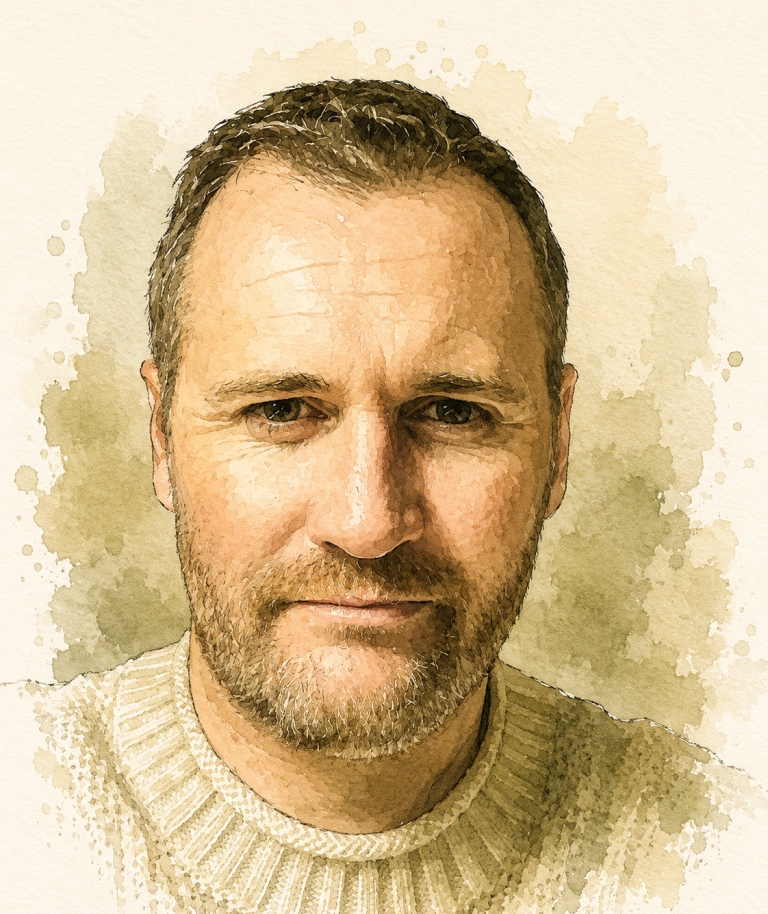
About Your Assessor
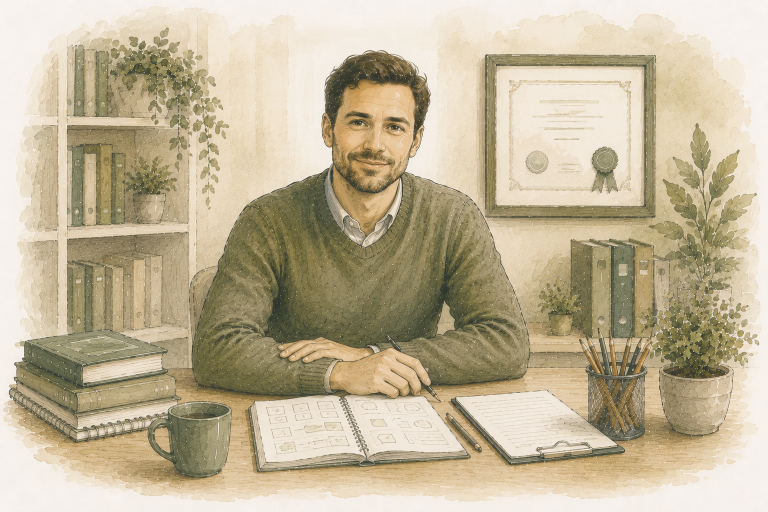
Every Defining Dyslexia assessment is carried out by Mark, a PATOSS-registered specialist assessor with fifteen years of experience supporting children, young people, and adults with dyslexia and other learning differences. Mark holds an APC and works to the standards set by SASC, the body that governs SpLD assessment quality across the UK. Mark's background as a former SENCo means he understands the school system from the inside, and brings that knowledge to every assessment and report he writes.
E-mail: Mark@definingdyslexia.org
We operate virtually across the UK, providing accessible support wherever you are. For in-person appointments, we serve Sheffield, Peterborough, and the surrounding area. Contact us to learn more!