What Is a SpLD? Dyslexia and Related Conditions Explained
If you've started looking into dyslexia, you may have come across the term SpLD. It can feel like yet another piece of jargon to decode. Additionally, understanding what it means can genuinely help you make sense of your child's (or your own) experiences.
So, What Does SpLD Stand For?
SpLD stands for Specific Learning Difficulty. It refers to a family of conditions that affect how people process certain types of information. These conditions are specific because they relate to particular areas of learning, rather than reflecting general intellectual ability.
Dyslexia is the most widely known SpLD. However, it sits alongside several related conditions, each of which can look quite different in day-to-day life.
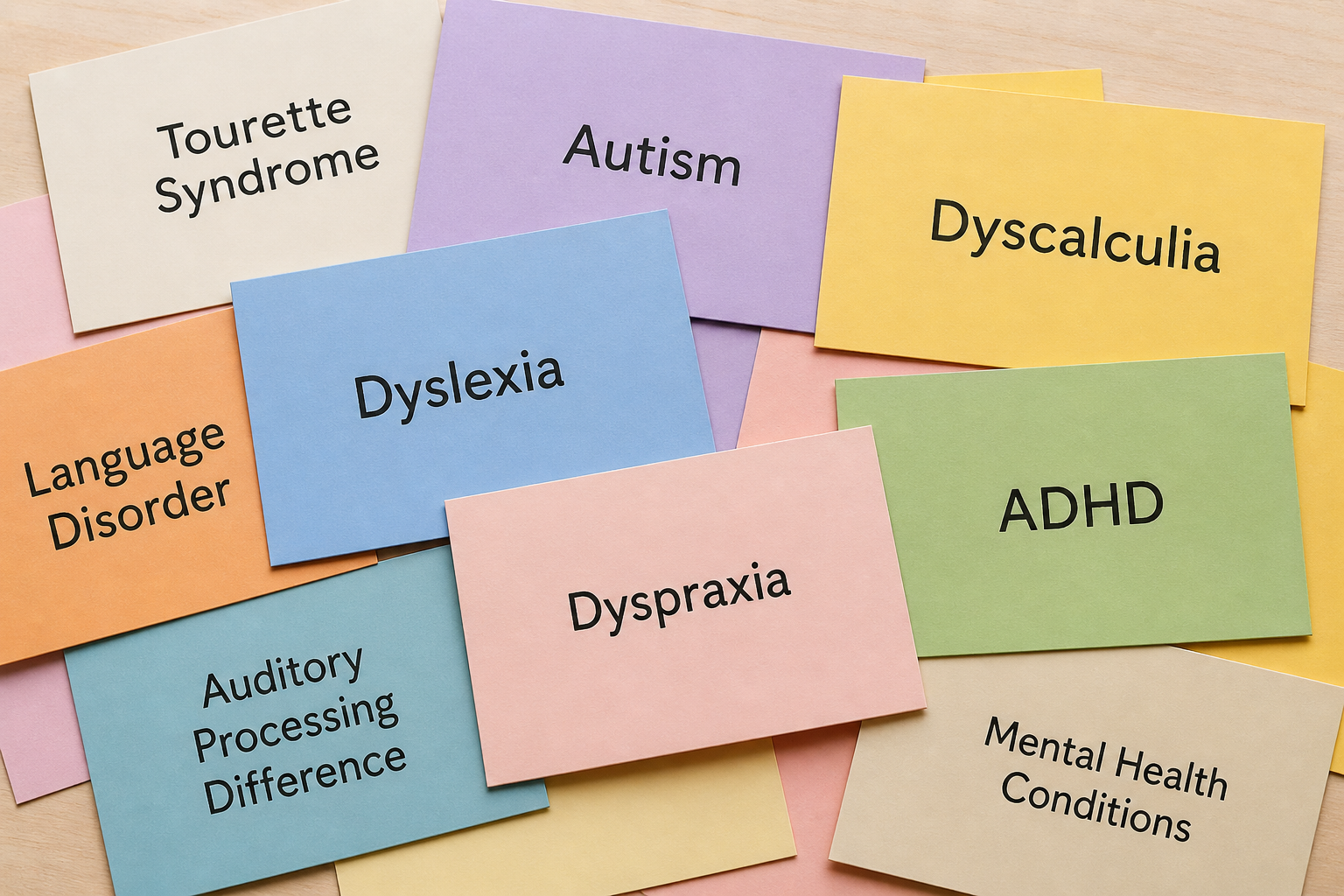
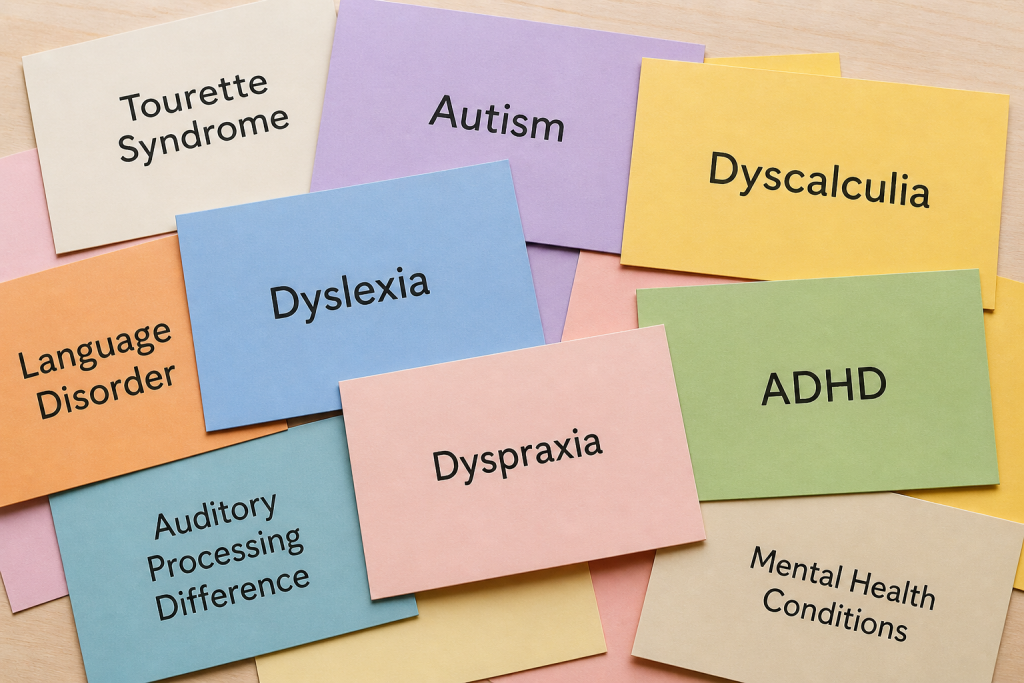
The SpLD Family
Here is a brief overview of the most commonly identified SpLDs.
Dyslexia
Dyslexia primarily affects reading, spelling, and written language at the word level. It is rooted in difficulties with phonological processing — the ability to recognise and manipulate the sounds within words. Additionally, it can affect working memory, processing speed, and organisation.
Importantly, dyslexia has nothing to do with intelligence. Many people with dyslexia are highly capable thinkers who simply process language differently.
Dyspraxia (Developmental Co-ordination Disorder)
Dyspraxia — also known as DCD — affects motor co-ordination and planning. A child with dyspraxia may struggle with handwriting, physical coordination, or organising themselves for everyday tasks. Additionally, it can affect speech and social interaction in some individuals.
Dyspraxia is often identified in childhood, though many adults are diagnosed later in life.
Dyscalculia
Dyscalculia affects a person's ability to understand and work with numbers. It goes beyond finding maths tricky — it reflects a fundamental difficulty in processing numerical information. Additionally, it can affect telling the time, managing money, and following sequences.
Like dyslexia, dyscalculia is not linked to general intelligence.
ADHD (Attention Deficit Hyperactivity Disorder)
ADHD affects attention, impulse control, and (in some presentations) activity levels. It is increasingly recognised as part of the SpLD profile, particularly because it frequently co-occurs with dyslexia. Additionally, ADHD can significantly affect learning, organisation, and emotional regulation.
ADHD presents differently across individuals and across genders, and it is often under-identified in girls.
Dysgraphia
Dysgraphia affects written expression and handwriting. A person with dysgraphia may find the physical act of writing difficult, or may struggle to organise and express their thoughts in written form. Additionally, it can overlap with both dyslexia and dyspraxia.
Autism
Autism is not always grouped under the SpLD umbrella. However, it frequently co-occurs with SpLDs and can affect learning in significant ways. Additionally, autistic individuals may process sensory information, social situations, and language quite differently — all of which can influence their experience in educational settings.
Why Do SpLDs Often Overlap?
One of the most important things to understand is that SpLDs rarely appear in isolation. Research consistently shows that conditions such as dyslexia and ADHD, or dyslexia and dyspraxia, frequently co-occur. This is sometimes called co-occurrence or comorbidity.
This is one reason why a thorough assessment matters. A good assessment does not simply confirm or rule out dyslexia — it looks at the full picture and considers whether other SpLDs may also be present.
Does Having an SpLD Mean My Child Has a Low IQ?
No. This is one of the most persistent and damaging myths surrounding SpLDs. By definition, a specific learning difficulty affects particular areas of processing — not overall cognitive ability. Many people with SpLDs have average, above-average, or exceptional intellectual abilities.
In fact, some children with SpLDs are described as twice exceptional, meaning they have both a learning difficulty and significant intellectual strengths. These children are sometimes the hardest to identify because their strengths can mask their difficulties.
Can You Have More Than One SpLD?
Yes — and this is very common. A formal assessment may identify a profile that includes dyslexia alongside dyscalculia, or ADHD alongside dyspraxia. Each person's profile is individual. Additionally, the way these conditions interact can be just as important as understanding each one separately.
What Should I Do If I Think My Child Has an SpLD?
The most helpful first step is to seek a formal assessment from a qualified specialist. A specialist teacher assessor or educational psychologist can assess across a range of SpLDs and provide a detailed profile of your child's strengths and difficulties.
Additionally, speaking with your child's SENCo (Special Educational Needs Co-ordinator) is a good early step — they can advise on what support is available in school and whether a referral may be appropriate.
A Final Word
SpLDs are not deficits. They are differences in the way the brain processes information. Additionally, with the right understanding and support, individuals with SpLDs can (and do) thrive across every area of life.
At Defining Dyslexia, I work with children and families where questions about learning often come with a lot of uncertainty. A good assessment looks at the full picture (not just one label), but the whole profile of how a child thinks and learns. Face-to-face appointments are available across Sheffield and South Yorkshire, and across Peterborough and Cambridgeshire, with remote assessments available nationwide.
If any of this sounds familiar, it's worth getting in touch. Sometimes the most important thing is simply having someone take the whole picture seriously.