Why Do Some Schools Not Recognise Dyslexia?
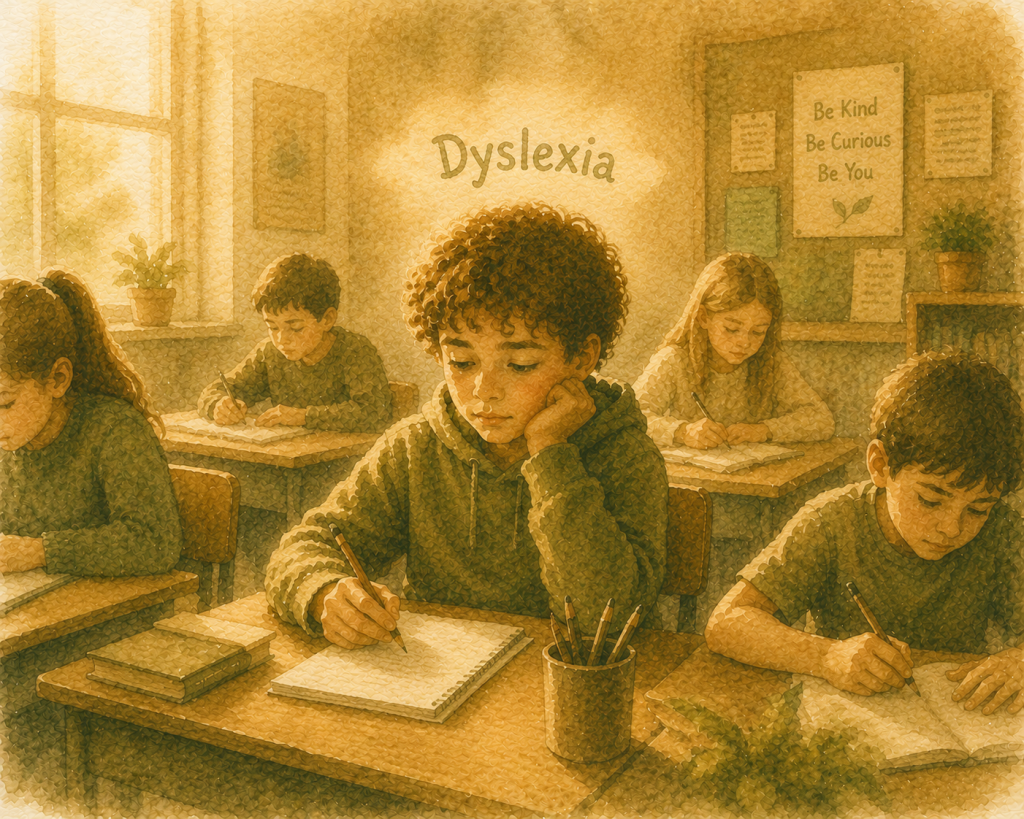
If you have raised concerns about your child's reading, writing, or spelling and felt like you were talking to a wall, you are not alone. Many parents describe the same experience. A growing sense that something isn't right. A conversation with school that goes nowhere. A feeling that the door has quietly closed before it was ever properly opened. Understanding why this happens doesn't make it less frustrating, but it can help you know what to do next.
The system is not designed to say yes easily
Schools operate within a framework that prioritises classroom-based support before formal identification. The graduated approach (assess, plan, do, review) is the mechanism through which schools are expected to identify and meet special educational needs. In theory it is a sensible system. In practice it can mean that children spend months or years cycling through low-level interventions that help just enough to make the concern feel managed, without ever getting to the bottom of what is actually going on.
Dyslexia is particularly vulnerable to this. A child who receives phonics support may make some progress. A child who is seated at the front and given extra time may cope a little better. The interventions produce enough movement to satisfy the system, whilst the underlying cognitive profile remains unidentified and unaddressed. The graduated approach, used well, is genuinely helpful. Used poorly, it can become a reason to delay rather than a route to support.
The word dyslexia makes some schools uncomfortable
Some schools are genuinely reluctant to use the word dyslexia. This reluctance has several roots. Some SENCos and teachers feel that dyslexia is a medical diagnosis outside their remit. Others have been advised, formally or informally, that attaching a label creates an expectation of provision that the school cannot always meet. Additionally, in some cases there is a genuine philosophical uncertainty, a feeling that what matters is meeting the child's needs, not naming the difficulty.
For parents, this can be deeply confusing. You are watching your child struggle. You are using a word that describes precisely what you are observing. And the school is responding with language that feels deliberately vague. That vagueness is not always malicious. But it is often unhelpful.
Primary school....caught early or missed entirely
At primary school, dyslexia is most commonly missed in one of two ways. The first is the child who is clearly struggling and whose difficulties are attributed to general developmental delay, lack of exposure to books at home, or simply being a late developer. The dyslexic profile goes uninvestigated because the surface explanation feels sufficient.
The second is the child who is coping. Not thriving, but coping. Sitting quietly, keeping up just enough, not causing concern. These children are particularly at risk of being missed entirely, because they have learned to compensate. They work twice as hard as their peers to produce half the output, and because the output is acceptable, nobody looks beneath it. Girls with dyslexia are disproportionately represented in this group, but it applies to any child who has learned that the safest thing to do is not be a problem.
Secondary school....a different set of pressures
By secondary school the picture changes. The curriculum becomes more demanding, the written load increases significantly, and the coping strategies that held things together at primary school begin to break down. Many young people are identified as having dyslexia for the first time at secondary school, not because their difficulties are new, but because the demands of the environment have finally overtaken their ability to compensate.
At the same time, secondary schools face their own pressures. With larger cohorts, more complex timetabling, and SENCos managing significant caseloads, the capacity for detailed individual assessment is limited. A young person who is not visibly struggling may not be prioritised. The difficulties are real. They are simply not visible enough to trigger action.
College....the final gap
For many young people with unidentified dyslexia, college is where things finally unravel. The independent study demands, the volume of reading and writing, and the reduction in pastoral support all combine to make the difficulties impossible to ignore. And yet at this stage the young person is often navigating the system largely alone, without the parental advocacy that helped at school, and without the institutional knowledge to know what they are entitled to.
Some colleges have excellent learning support teams. Others do not. And a young person who has spent their entire education being told they are managing may not even know that support is available, let alone how to ask for it.
The inconsistency is part of the problem
As with local authorities, provision varies enormously between schools. Some schools have well-trained SENCos, clear referral pathways, and a culture that takes dyslexia seriously. Others have a SENCo covering three other roles, a waiting list for any kind of assessment, and a default position of watchful waiting that can last years.
This inconsistency means that whether a child's dyslexia is identified at school depends less on the nature or severity of their difficulty and more on which school they attend, which teacher they happen to have, and whether their parent has the knowledge and confidence to push. That is not a system working as it should.
Equally, for some the local authority view to dyslexia also impacts the support given. See the blog post https://www.definingdyslexia.org/knowledge/why-do-some-local-authorities-not-recognise-dyslexia/
What the law actually says
Schools have a legal duty under the SEND Code of Practice 2015 to identify and meet the special educational needs of their pupils. This includes dyslexia. A school cannot simply decline to engage with a concern because it feels outside their remit, because they lack specialist staff, or because they prefer not to use diagnostic labels.
Where a school is not meeting this duty, parents have the right to request a statutory assessment for an Education, Health and Care Plan. They also have the right to seek an independent assessment without the school's involvement or permission. A formal assessment report from a qualified specialist teacher carries legal weight and cannot be dismissed by a school simply because it was privately commissioned.
What can you do?
If school is not taking your concerns seriously, the most effective step you can take is to gather your own evidence. Keep a record of the difficulties you are observing at home. Request a meeting with the SENCo specifically and ask directly what assessments have been carried out and what the outcomes were. Ask what the school's graduated approach looks like for your child and what the next steps are.
If you are not getting satisfactory answers, a private dyslexia assessment gives you independent evidence that is difficult for a school to ignore. It reframes the conversation from parental concern to professional finding and in many cases changes the school's response entirely.
A final word
Most teachers and SENCos are doing their best inside a system that makes identification genuinely difficult. The problem is not usually indifference. It is capacity, confidence, training, and a set of structural incentives that do not always point in the right direction. None of that makes it acceptable, but understanding it may make the conversations you need to have a little easier to navigate. Your instincts about your child matter. They are worth pursuing, whatever the system says.
How Defining Dyslexia can help
At Defining Dyslexia, we offer full diagnostic SpLD assessments for children and adults across Sheffield, South Yorkshire, and Peterborough, with remote assessments available across the UK. Every assessment includes time at the end to talk through findings together, so you leave with a clear understanding of the results, not just a document to decipher on your own.
If you have questions about your child's scores, or you are wondering whether an assessment might be the right next step, we are happy to have an initial conversation. There is no obligation, and sometimes a short chat is all it takes to feel clearer about where to go next.
You can get in touch via the contact page at https://www.definingdyslexia.org/contact-us/