Signs of Dyslexia in Children: What Parents and Teachers Should Look Out For
If you've noticed that your child is struggling with reading, writing, or spelling despite working hard and receiving support, you may be wondering whether dyslexia could be a factor. Recognising the signs early makes an enormous difference to the support a child receives and the outcomes they achieve. This guide outlines the most common signs of dyslexia in children at different ages, and explains what to do if you have concerns.
What is dyslexia?
Dyslexia is a specific learning difficulty that primarily affects reading, writing, and spelling. It is neurological in origin, meaning it relates to the way the brain processes language rather than a child's intelligence or effort. Many children with dyslexia are bright, articulate, and creative — their difficulties with written language simply don't reflect their true ability.
Dyslexia affects each child differently, and no two profiles look exactly the same. However, there are common signs that parents and teachers can look out for at different stages of development.
Early signs in younger children
Even before a child starts school, there can be early indicators worth noting. These include delayed speech development, difficulty learning nursery rhymes, trouble remembering the names of familiar objects, and challenges with sequencing such as reciting days of the week or the alphabet in order.
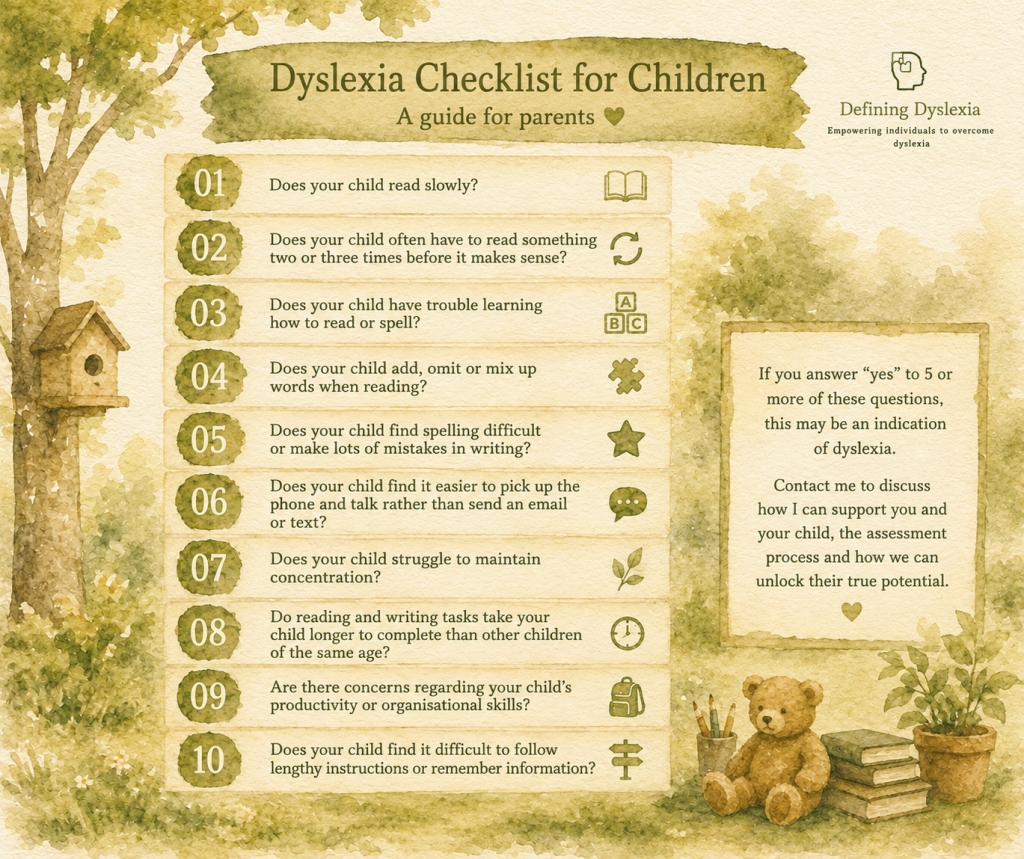
Once a child starts school, further signs may emerge, including difficulty connecting letters with their sounds, slow progress with reading despite good teaching and effort, inconsistent spelling where the same word may be spelled differently within the same piece of work, and a noticeable gap between what a child can say verbally and what they can express in writing.
Signs in primary school-age children
At primary school age, some of the most common indicators include difficulty following multi-step instructions, forgetfulness around words or an inability to recognise words that should be familiar, stronger oral skills than written work, poor reading comprehension despite being able to read the words aloud, and general disorganisation that seems at odds with their ability in other areas.
It's also worth noting that children with dyslexia often show inconsistent performance, where their ability can vary significantly from day to day. This can sometimes be misread as lack of effort or concentration when, in fact, it reflects the genuine variability that is characteristic of dyslexia.
Signs in secondary school-age children
As children move into secondary school, the signs of dyslexia can shift and sometimes become more obvious under the increased academic demands. Common indicators at this stage include confusing similar looking or sounding words, difficulty with left and right, clear challenges processing written information at pace, persistent disorganisation across subjects, and a marked gap between the quality of a child's spoken contributions in class and what they are able to produce in writing.
Many secondary age students with unidentified dyslexia develop coping strategies that can mask their difficulties, making it harder to spot. A student who avoids reading aloud, takes much longer than peers to complete written tasks, or becomes anxious around exams may be struggling with an unidentified underlying difficulty.
Strengths to look out for alongside the difficulties
It's important to recognise that dyslexia is not simply a list of difficulties. Many children with dyslexia demonstrate real strengths in areas such as creative thinking, problem solving, verbal reasoning, and big picture thinking. A child who struggles to put their ideas on paper may have exceptional verbal ability and imagination. Recognising and nurturing these strengths alongside addressing the difficulties is a vital part of supporting a dyslexic child well.
What should you do if you recognise these signs?
If you recognise several of these signs in your child, the first step is to speak to their class teacher and SENCo. Schools have an obligation to identify and support learning needs, and raising your concerns early gives them the opportunity to put initial support in place and monitor progress.
If school support hasn't made a significant difference, or if you want a clearer and more detailed picture of your child's learning profile, a formal dyslexia assessment carried out by a qualified specialist assessor is the most reliable next step. An assessment will identify not just whether dyslexia is present, but the specific nature of your child's profile, their strengths as well as their difficulties, and the most effective strategies to support them going forward.
How Defining Dyslexia can help
At Defining Dyslexia, we offer both initial dyslexia screening and full diagnostic SpLD assessments for children and young people. All assessments are carried out by a PATOSS-registered specialist assessor with fifteen years of experience working with children across a wide range of needs. We also offer post-diagnostic support and can liaise directly with your child's school following an assessment.
Face-to-face appointments are available across Sheffield and South Yorkshire and across Peterborough and Cambridgeshire, with remote assessments available for families anywhere in the UK.
If you have concerns about your child's learning, please don't hesitate to get in touch.